
How You Can Reverse Ghrelin Increase After Weight Loss
I. Introduction: The Weight Loss Paradox
“You can strategically learn to reverse ghrelin increase after weight loss by implementing specific, science-backed behavioral and dietary strategies designed to modulate your appetite-regulating hormones.“
You did the hard work. You achieved significant weight loss, hitting your goals through dedication and consistency. Yet, weeks or months later, you find yourself facing a relentless, deep-seated hunger that feels impossible to manage.
This is the Weight Loss Paradox—the biological phenomenon where your own body fights against your success, making the maintenance phase feel harder than the weight loss itself.
If you have lost 10% or more of your body mass, you are likely experiencing the power of metabolic adaptation, driven primarily by the hunger-signaling hormone, Ghrelin.
The persistent rise in the hunger hormone ghrelin following body weight reduction is a crucial physiological adaptation, acting to defend a higher body weight “set-point” and actively promoting weight regain. Fortunately, this is not an insurmountable obstacle.
This guide will detail the clinical evidence and provide science-backed strategies to help you reverse ghrelin increase after weight loss, reclaim control over your appetite, and secure your long-term health gains.

II. Metabolic Adaptation: Why Your Body Fights Back
To understand how to reverse the ghrelin surge, we must first understand the mechanism behind it. Your body is equipped with powerful, ancient survival mechanisms that interpret significant calorie restriction as a threat of starvation.
Weight loss triggers a complex hormonal shift designed to compel you to eat more and conserve energy.
The Ghrelin/Leptin Compensatory Mechanism
The two key players in this hormonal fight are Ghrelin and Leptin.
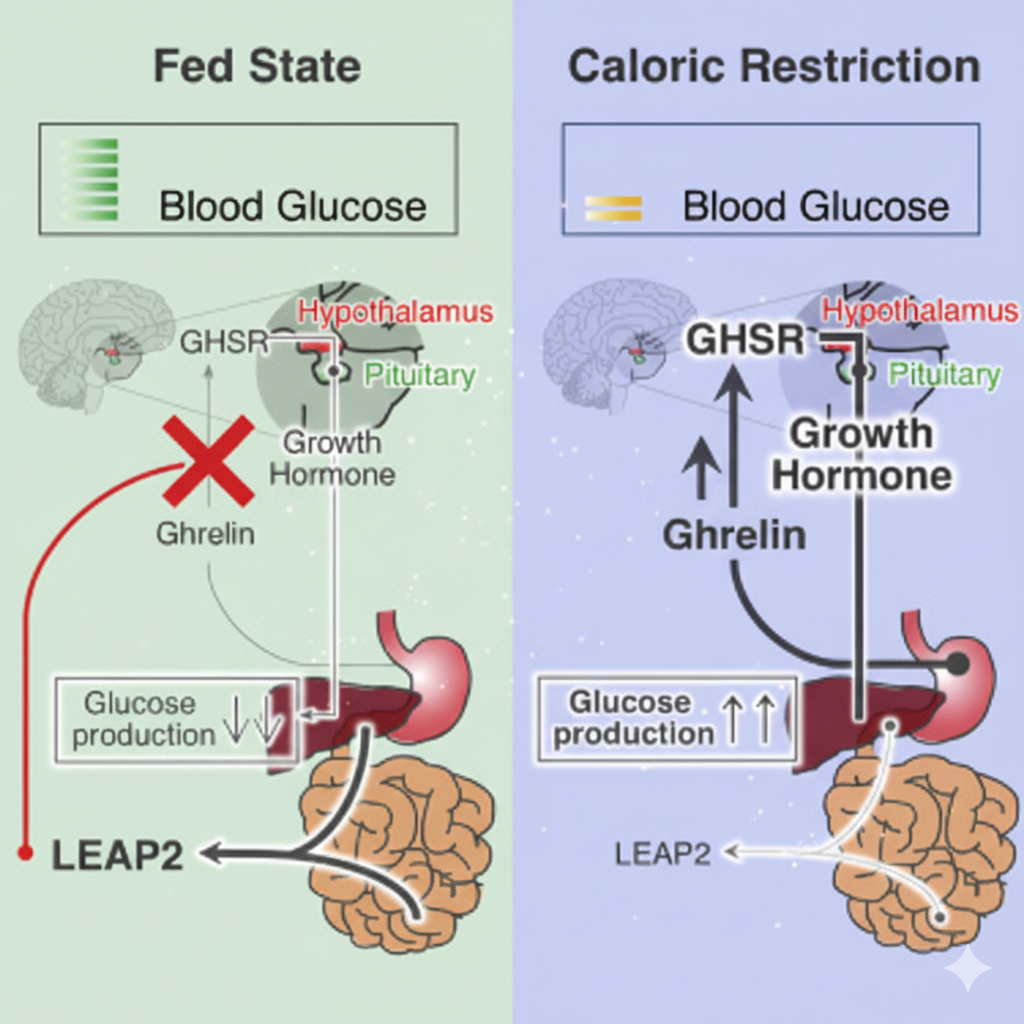
- Ghrelin (The Hunger Hormone): Primarily produced in the stomach, Ghrelin signals to the hypothalamus (the control center of the brain) that the stomach is empty and it is time to seek food. Normally, Ghrelin levels peak before meals and drop sharply after eating.
- Leptin (The Satiety Hormone): Produced by fat cells, Leptin signals satiety, letting the brain know that energy stores are sufficient.
In the weight loss phase, this system goes into alarm mode:
- Ghrelin Levels Soar: Research confirms that diet-induced weight loss leads to a significant increase in circulating Ghrelin levels. One landmark study found that a weight loss of 17% of initial body weight was associated with a 24% increase in the 24-hour ghrelin profile area under the curve ($P=0.006$) (Source 1.1).
- Leptin Levels Crash: At the same time, the reduction in fat mass causes Leptin levels to plummet, removing the primary signal of fullness.
This double punch—high hunger signals combined with absent fullness signals—is the definition of rebound hunger. Critically, these compensatory metabolic changes have been shown to persist for at least one year after initial weight loss, explaining why the first year of maintenance is the hardest (Source 1.2). The solution is not to fight hunger with willpower, but to use targeted, evidence-based interventions to modulate these appetite-regulating hormones.
III. Nutrition: Calming the Ghrelin Surge
Dietary changes are the most direct way to signal satiety and begin to reverse ghrelin increase after weight loss. The focus must shift from pure calorie restriction to nutrient density and hormonal modulation.
1. Prioritize Protein Intake
Protein is the most satiating macronutrient. It not only suppresses Ghrelin directly but also stimulates the release of key satiety hormones like Glucagon-Like Peptide-1 (GLP-1) and Peptide YY (PYY), which work to slow gastric emptying.
- Actionable Data: Researchers suggest aiming for 1.2-1.6 grams of protein per kilogram of body weight per day (or 25–30% of daily calories) to promote appetite suppression and LBM preservation (Source 1.2).
- Targeting the Surge: Studies have shown that consuming a whey protein preload significantly increased GLP-1 and PYY secretion and reduced subjective hunger ratings in obese women compared with control groups, making protein the cornerstone of every meal (Source 2.1).
2. Leverage High-Fiber, Low-Glycemic Carbohydrates
Foods high in soluble fiber help stabilize blood sugar and promote satiety through multiple mechanisms.
- Slow Ghrelin Suppression: Fiber-rich foods (whole grains, legumes, vegetables) require more chewing, take longer to digest, and extend the postprandial (after-meal) reduction in ghrelin levels.
- Stable Blood Sugar: Ghrelin levels rise when blood sugar drops too quickly. Choosing low-glycemic, high-fiber carbs helps maintain consistent energy, preventing the rapid blood sugar decline that often precedes a Ghrelin spike.
3. Establish Meal Regularity
Trying to “avoid an empty stomach” by grazing is counterproductive. The goal is predictable eating patterns. Ghrelin operates on a circadian rhythm, and regular meal timing can help stabilize the hormone cycle.
- Avoid Prolonged Fasting: For those specifically struggling with the post-diet Ghrelin surge, very long periods of fasting can lead to larger, more aggressive Ghrelin spikes. Eating breakfast regularly is a key behavioral strategy consistently reported by successful weight loss maintainers (Source 2.2).
IV. Metabolic Training: Using Exercise to Reverse Ghrelin Increase After Weight Loss
While diet directly manages intake, exercise—specifically Metabolic Training—is essential to correct the compensatory reduction in energy expenditure, which is a major driver of weight regain (Source 1.6).
The Essential Role of Resistance Training
The effect of exercise on Ghrelin is nuanced, but the effect of maintaining Lean Body Mass (LBM) is not: LBM is the primary engine of your metabolism.
- Preserving RMR: Weight loss causes a drop in Resting Metabolic Rate (RMR) far beyond what is predicted by the change in body composition (metabolic adaptation). Engaging in Resistance Exercise (RE) is critical to preserving muscle mass and mitigating this RMR slowdown, which is a key factor in long-term weight maintenance (Source 1.6).
- Cardio Nuance: Studies on isolated Aerobic Exercise (AE) show mixed or non-significant results on Ghrelin levels. The focus, therefore, must be on combined AE and RE interventions, with RE being the priority for maintaining the metabolically active tissue that counters the body’s defensive slow-down (Source 1.1).
TRUSTHUB Action Plan: Aim for 2-3 sessions of full-body Resistance Training per week, targeting large muscle groups. This is your insurance policy against the metabolic slowdown and complements your nutritional strategy to reverse ghrelin increase after weight loss.
V. Lifestyle Factors: The Non-Diet Keys to Appetite Control
The final component of hormonal balance lies outside the gym and the kitchen. Ghrelin is a hormone of survival, meaning it is highly sensitive to environmental and psychological stressors.
1. Secure Your Sleep (The Leptin-Ghrelin Flip)
Poor sleep directly disrupts the delicate balance of appetite hormones.
- The Reversal: Normally, Leptin levels rise and Ghrelin levels fall while you sleep. When sleep is restricted, this balance is reversed: Leptin levels fall, and Ghrelin levels rise, leading to significantly increased appetite and cravings for high-calorie, high-fat foods the next day (Source 1.2).
- Long-Term Strategy: Aim for a minimum of 7 hours of quality sleep in a 24-hour period. Improving sleep quality was independently associated with greater odds of achieving at least 3% weight loss maintenance (Source 2.1).
2. Monitor and Mitigate Chronic Stress
Chronic stress leads to elevated cortisol, which has a complex interplay with insulin and Ghrelin, increasing hunger signals and promoting fat storage, particularly visceral fat.
- Behavioral Strategies: Successful long-term maintainers report lower levels of disinhibition and eating in response to negative emotions (Source 2.1). Techniques like mindfulness, deep breathing, and non-exercise physical activity (NEAT) are crucial for managing the stress that feeds the hormonal cycle of regain.
3. Practice Consistent Self-Monitoring
The behaviors associated with long-term weight maintenance are consistent:
- Data Point: Members of the National Weight Control Registry (NWCR) who maintain significant weight loss report weighing themselves at least once a week and following a consistent eating pattern across weekdays and weekends (Source 2.2). This vigilance helps catch the small metabolic shifts before they turn into major hormonal setbacks.
VI. Conclusion
Weight regain after successful weight loss is not a failure of willpower; it is a complex, biologically driven event resulting from the body’s effort to reverse ghrelin increase after weight loss while Leptin signals decline.
The TRUSTHUB approach is to fight metabolic adaptation with a science-backed, multi-pronged strategy: high-protein, high-fiber nutrition to suppress Ghrelin, consistent Metabolic Training (Resistance Exercise) to protect RMR, and meticulous attention to sleep and stress to stabilize the hormonal environment.
By prioritizing these evidence-based strategies, you can successfully beat rebound hunger, master your appetite-regulating hormones, and finally achieve the long-term, sustainable results you deserve.
Discover how our Vetting Standards ensure every piece of advice we give, including this guide, is medically reviewed and grounded in the latest nutritional science.