
Table of Contents
Prevent Ozempic Fatigue – The Importance of Electrolytes
Evidence-based guidance for optimizing electrolyte balance, supporting energy, and minimizing fatigue while taking Ozempic (semaglutide)
Introduction
If you’re ready to Banish Ozempic Fatigue and finally stop feeling like a zombie, you’re in the right place. You’ve finally found a tool that works, the scale is moving, but suddenly, you feel like you’re walking through quicksand.
If you’ve traded your appetite for a constant need for a nap, you are likely battling Ozempic fatigue. That “zombie” feeling isn’t just a side effect of eating less; it’s often a sign that your body’s electrical system—your electrolytes—is running on empty.
Understanding how to manage Ozempic fatigue is the secret to staying consistent on your weight loss journey without losing your zest for life. In this guide, we’ll explore the best minerals to help you reclaim your energy and why traditional “sports drinks” might be making your Ozempic fatigue even worse.
Fatigue is a commonly reported side effect of Ozempic (semaglutide), present in clinical trial safety data and patient experience. By FDA Access Data in placebo-controlled trials, fatigue was observed as an adverse reaction at a frequency greater than 0.4% in treated patients.

Though fatigue with GLP-1 receptor agonists like Ozempic is likely multifactorial — involving appetite suppression, reduced caloric/nutrient intake, gastrointestinal side effects (e.g., nausea, vomiting, diarrhea), and metabolic adaptations — electrolyte imbalance and dehydration are important modifiable contributors that deserve careful attention in both clinical practice and self-care strategies.
Electrolytes regulate fluid balance, nerve conduction, muscle function, cardiac rhythm, and cellular energy metabolism; even modest deficiencies can manifest as lethargy, weakness, dizziness, or cognitive clouding.
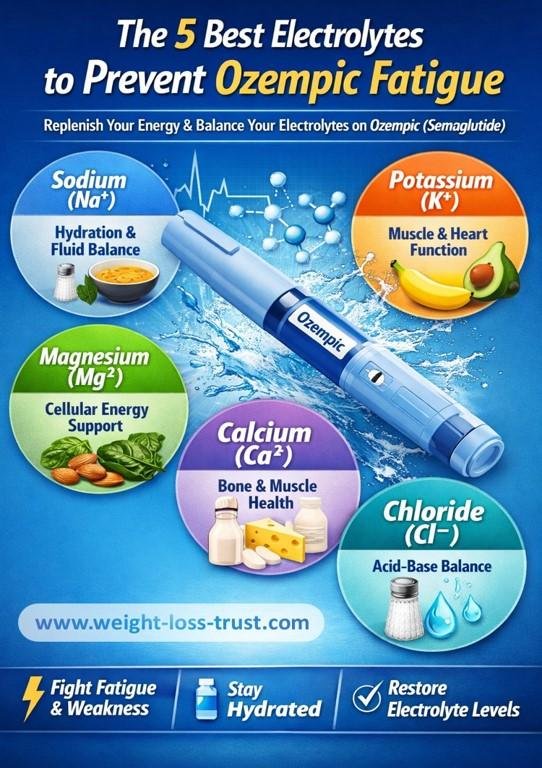
This article identifies the five key electrolytes relevant to Ozempic fatigue and explicates how to address them.
Why Does GLP-1 Use Cause Such Heavy Tiredness?
Before we fix it, we have to understand the “why.” When you are on a GLP-1 medication, you aren’t just losing fat; you are often losing water and essential minerals at an accelerated rate. This rapid shift in fluid balance is the primary driver of Ozempic fatigue.
Furthermore, because these medications slow down digestion, your body may not be absorbing minerals from your food as quickly as it used to.
This “mineral gap” manifests as brain fog, muscle weakness, and that signature Ozempic fatigue that hits hardest in the mid-afternoon. To beat this, you need a targeted electrolyte strategy that prioritizes bioavailability over sugar content.
While managing Ozempic fatigue is essential for your daily energy, many users find that these metabolic shifts also influence how they perceive hunger. If you’re also noticing changes in your cravings, check out our guide on how to silence GLP-1 food noise for a complete metabolic reset.
1. Sodium (Na⁺) — The Principal Hydration Electrolyte
Why It Matters
While many people fear salt, a lack of sodium is a leading cause of the “keto flu” symptoms often mistaken for Ozempic fatigue. You need enough sodium to help your body actually hold onto the water you drink.
Sodium is the dominant extracellular electrolyte responsible for maintaining fluid balance, osmotic pressure, and nerve signaling. It supports circulatory volume and gastric motility — both of which can be compromised with reduced intake due to appetite suppression.
A mild sodium deficit can manifest as fatigue, sluggishness, headache, and dizziness.
Evidence and Considerations
- Severe gastrointestinal losses (vomiting or significant diarrhea), common early in dose escalation, can deplete sodium and contribute to dehydration and fatigue.
- A modest increase in sodium intake (“lightly salted meals” or broth) may improve hydration status without detrimental blood pressure effects in most individuals.
Practical Sources
- Bone broth or light homemade broth
- Electrolyte solutions with a balanced sodium profile
- A pinch of sea salt in water (moderation required)
2. Potassium (K⁺) — The Heart & Muscle Protection, Nerve Function
Why It Matters
Low potassium is a common culprit behind the “heavy legs” feeling associated with Ozempic fatigue. Potassium is crucial for cellular function: it maintains the resting membrane potential for muscles and nerves, supports cardiac rhythm, and helps regulate fluid levels.
Potassium helps regulate fluid balance inside your cells. Look for powders that offer at least 200–400mg per serving to keep your muscles firing correctly.
Low potassium (hypokalemia) causes weakness, muscle cramps, palpitations, and fatigue.
Relevance to Ozempic
- Appetite suppression plus intermittent vomiting or diarrhea can lead to potassium losses.
- Guidelines note that significant potassium depletion requires clinical attention when accompanied by weakness or cardiac symptoms.
Practical Sources
- Bananas, avocados, spinach, sweet potatoes, white beans
- Low-sugar electrolyte drinks with potassium content
- Coconut water (natural potassium source)
3. Magnesium (Mg²⁺) — Cellular Energy and Neuromuscular Support
Why It Matters
Magnesium (The Energy Spark)
Magnesium is involved in over 300 biochemical reactions, including energy production including ATP synthesis (cellular energy), neuromuscular transmission, and glucose metabolism.
To fight Ozempic fatigue, look for supplements that use Magnesium Malate or Magnesium Glycinate. These forms are easier on the stomach—a must-have for anyone dealing with GLP-1 digestive sensitivity.
Deficiency correlates with fatigue, muscle cramps, brain fog, and sleep dysregulation.
CLINICAL NOTE: GLP-1 drug use and reduced dietary intake can contribute to suboptimal magnesium status. Some clinical analyses suggest that antidiabetic treatments can influence magnesium handling at the renal level, though changes are typically mild.
Practical Sources
- Nuts and seeds (almonds, pumpkin seeds)
- Dark leafy greens (spinach, Swiss chard)
- Whole grains and legumes
4. Calcium (Ca²⁺) — Muscle Contraction & Neuromuscular Signal Messenger
Why It Matters
Calcium isn’t just for bones. This substance plays crucial a role in neuromuscular signaling, muscle contraction, and intracellular communication.
Ensuring your electrolyte mix includes calcium helps prevent the “jittery but tired” sensation that often accompanies Ozempic fatigue.
Insufficiency may contribute to muscle fatigue and weakness, especially when combined with other electrolyte deficits.
Relevance in Context
While direct evidence linking semaglutide to calcium imbalance is limited, reduced dietary calcium intake due to diminished appetite may affect energy and musculoskeletal function.
Practical Sources
- Dairy (milk, yogurt, cheese) and fortified alternatives
- Leafy greens (collard greens, kale)
- Calcium-containing electrolyte mixes
5. Chloride (Cl⁻) — Acid-Base and Hydration Balance
Why It Matters
Chloride is the fluid balancer in the body. Often paired with sodium, chloride works to maintain proper blood volume and pressure.
Keeping your blood pressure stable is key to preventing the dizziness that often mimics Ozempic fatigue.
Chloride accompanies sodium to maintain fluid balance and acid–base homeostasis. Low chloride (hypochloremia) can result from prolonged vomiting and contribute indirectly to fatigue by affecting breathing patterns and electrolyte equilibrium.
Sources
Chloride intake generally aligns with sodium intake (table salt is sodium chloride). Adequate hydration and balanced sodium chloride intake typically support chloride levels.
Supporting Strategies for Electrolyte Balance

Strategic Hydration
To truly hit the “mute” button on Ozempic fatigue, consistency is key. Consistent fluid intake throughout the day — not just large boluses — enhances cellular hydration and nutrient delivery.
Don’t wait until you feel exhausted to hydrate. Start your morning with a large glass of water infused with a high-quality, sugar-free electrolyte powder.
If you drink plain water all day without replacing minerals, you actually flush out the remaining electrolytes, which can worsen your Ozempic fatigue.
Think of electrolytes as the “key” that allows water to actually enter your cells and provide energy.
Low-sugar electrolyte solutions or broths can help maintain sodium, potassium, and magnesium levels when appetite is suppressed.
Monitor Symptoms and Labs
Clinical electrolyte monitoring (comprehensive metabolic panel) can identify hyponatremia, hypokalemia, or other electrolyte imbalances that present as fatigue. Consult a clinician if symptoms like severe weakness, palpitations, confusion, or persistent dizziness occur.
Diet Quality Matters
Because GLP-1 medications slow gastric emptying and suppress appetite, nutrient-dense, easily digestible foods become more important. Small, frequent meals higher in electrolyte-rich foods can improve intake where larger meals feel intolerable.
Cautions and Clinical Considerations
Over-supplementation Risk: Excessive electrolytes — especially sodium and potassium — can cause harmful effects (e.g., fluid retention, high blood pressure, cardiac issues). Electrolyte supplementation should be purposeful and appropriately dosed.
Individual Variation: People with pre-existing conditions (kidney disease, heart failure) or those on medications that affect electrolyte handling (diuretics, ACE inhibitors) require individualized guidance and professional oversight.
FAQ (Frequently Asked Questions)
Conclusion: Reclaiming Your Energy
You don’t have to choose between weight loss success and having enough energy to enjoy your life. By recognizing that Ozempic fatigue is often a nutritional SOS from your body, you can take proactive steps to fuel your cells.
By prioritizing these five essential minerals, you can transform your experience from a sluggish struggle into an energized transformation.
While Ozempic-related fatigue is multifactorial, maintaining optimal electrolyte balance stands out as a practical, evidence-informed approach to support energy and physiological resilience.
Sodium, potassium, magnesium, calcium, and chloride each play distinct, measurable roles in hydration, nerve and muscle function, and cellular energy metabolism.
Proper hydration is only half the battle. Make sure you are pairing your minerals with a nutrient-dense GLP-1 meal plan to protect your muscle mass.
Remember, Weight Loss Trust is here to provide the science-backed tips you need to thrive, not just survive, on your medication.