
In the rapidly evolving landscape of 2025, the demand for nutrient-dense meal delivery for GLP-1 users has shifted from a niche wellness trend to a clinical necessity.
Table of Contents
GLP-1 Friendly Custom Meal Plans for Weight Management
As medications like semaglutide (Ozempic, Wegovy) and tirzepatide (Mounjaro, Zepbound) become the gold standard for obesity management, the food industry is pivoting to address a new physiological reality: the “Nutrient-Density Gap.”
Such adoption of GLP-1 (glucagon-like peptide-1) receptor agonists for weight management and type 2 diabetes has created unique nutritional needs.
These medications suppress appetite, delay gastric emptying, and promote satiety, which improves glycemic control and fosters weight loss.
While they help reduce overall food intake, they may lead to risk of inadequate macro- and micronutrient consumption, loss of lean mass, and gastrointestinal symptoms if diet quality is suboptimal.
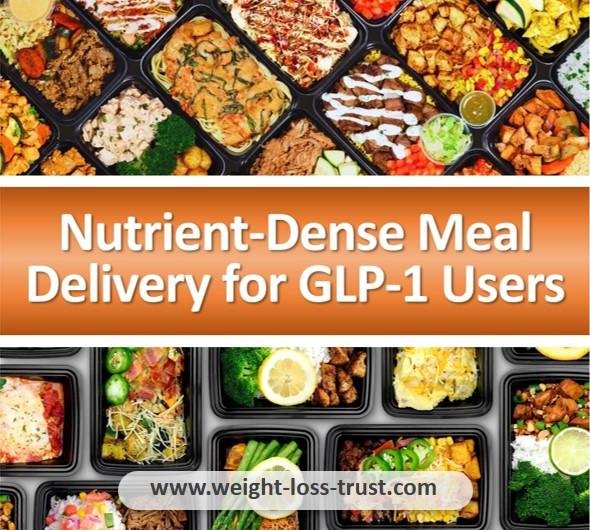
Emerging meal delivery services and product lines now focus on nutrient-dense, high-protein, high-fiber offerings designed specifically for GLP-1 users, addressing both clinical nutrition priorities and real-world adherence challenges.
This article provides a deep dive into the science, industry trends, and practical selection criteria for nutrient-dense meal delivery for GLP-1 users.
1. The Physiological “Nutrient-Density Gap”
GLP-1 receptor agonists function by delaying gastric emptying and modulating hypothalamic hunger signals. While highly effective for weight loss, these mechanisms create a unique nutritional paradox. Users experience early satiety and a significant reduction in food volume—often cutting caloric intake by 30% to 50%.
When you consume half the food, every bite must contain twice the nutrients. A high-quality nutrient-dense meal delivery for GLP-1 users is designed to prevent “malnutrition in obesity,” ensuring that rapid weight loss does not lead to bone density loss, hair thinning, or extreme fatigue.
The Muscle Preservation Mandate
Recent clinical data from 2024 and 2025 (including the ENDO 2025 findings) highlight that up to 40% of weight lost on GLP-1s can be lean muscle mass (sarcopenia). To combat this, experts now recommend:
- Protein Thresholds: 1.2g to 1.5g of protein per kilogram of body weight.
- Amino Acid Bioavailability: Prioritizing leucine-rich proteins (whey, lean beef, soy) to stimulate muscle protein synthesis despite a caloric deficit.
2. Key Features of Authority-Level Meal Delivery
A superior nutrient-dense meal delivery for GLP-1 users must move beyond “low calorie” labels. True authority-level services in 2025 focus on three clinical pillars:
a. The Fiber-Hydration Matrix
GLP-1s commonly cause gastrointestinal motility issues, such as constipation. To help in managing GLP-1 gastrointestinal side effects meal services are now integrating prebiotic fibers (chicory root, Jerusalem artichoke) and “water-heavy” produce (zucchini, cucumber, jicama) into their recipes to support gut health and hydration.
b. Micro-Concentration
Since the food volume is limited, meals must be “fortified” naturally to include essential vitamins for GLP-1 users.
This includes:
- Phytochemical-rich sauces: Using herbs and spices (turmeric, ginger, parsley) to provide antioxidants without adding bulk.
- Satiety-optimized portions: Smaller, 300–450 calorie meals that are exceptionally high in Zinc, B12, and Iron—nutrients often depleted during rapid weight loss.
c. Gastric Tolerance Engineering
To manage nausea—a primary side effect—the best nutrient-dense meal delivery for GLP-1 users avoids heavy industrial oils and excessive “spicy” heat, opting instead for clean, steamed, or roasted preparations that are easy on the stomach.
3. Understanding the Nutritional Context of GLP-1 Therapy
3.1. Mechanism and Dietary Impact
GLP-1 receptor agonists mimic the endogenous GLP-1 hormone, enhancing insulin secretion, suppressing glucagon, and acting on central appetite centers to reduce hunger and food intake. This metabolic effect underlies their efficacy in both diabetes management and obesity treatment. ynet
Reduced appetite is beneficial for weight control but can inadvertently lower overall nutrient intake, including protein, essential fatty acids, vitamins, and minerals, especially if meal volume is constrained.
3.2. Nutrition Risks and Priorities
Leading dietitians and clinical guidelines emphasize that GLP-1 users should focus on:
- Nutrient-dense foods to ensure adequate vitamins and minerals in smaller portions.
- High-quality protein to preserve lean muscle mass during weight loss.
- Fiber for digestive health and glycemic stability.
- Balanced macronutrient distribution to support satiety without excess caloric intake.
- Micronutrient coverage, particularly for B vitamins, vitamin D, iron, and calcium, which are sometimes compromised in reduced-intake diets.
- Regular meal patterns to mitigate nausea and other GI side effects
4. The Role of Meal Delivery Services
4.1. Why Meal Delivery Matters for GLP-1 Users
Meal delivery services can offer structured, pre-portioned meals that help GLP-1 users:
- Hit protein and micronutrient targets even with reduced appetite.
- Minimize decision fatigue and nutritional guesswork.
- Provide consistent variety and flavor without requiring long meal preparation.
- Adapt to clinically meaningful nutritional guidelines while respecting appetite suppression.
This is especially valuable for users experiencing food aversion or small appetites, common with GLP-1 therapy. Peer discussions highlight that outsourcing meals can ease the burden of nutrition planning.
4.2. Recent Industry Initiatives
Several food and meal delivery companies have begun explicitly addressing the needs of GLP-1 users:
- CookUnity’s GLP-1 Balanced Meal Collection: A chef-curated line scientifically designed with high protein, fiber, and essential nutrients to support satiety and help prevent muscle loss on GLP-1 medications, blending culinary quality with nutritional needs.
- Retail nutrient-dense food ranges: For example, Marks & Spencer and other retailers are launching products specifically marketed as nutrient dense for people on weight-loss drugs, including GLP-1 medications.
- Existing meal delivery brands adapting options: Companies like Trifecta Nutrition now offer “GLP-1 meal plans” emphasizing lean proteins, non-starchy vegetables, whole grains, and balanced macronutrients, framing meals to align with glycemic and satiety goals.
Such offerings illustrate an industry shift toward evidence-informed, user-centric nutrition solutions.
5. Core Principles for Nutrient-Dense Meal Delivery
5.1. Macronutrient Composition
Protein
- Primary focus: Lean proteins such as poultry, fish, legumes, tofu, and dairy.
- Target: Many GLP-1 dietary plans aim for ~80 g + of protein per day to support muscle maintenance.
Fiber
- Helps with satiety and may support gut microbiota that influence endogenous GLP-1 production.
- Sources: Vegetables, legumes, whole grains, and fruits. Balanced fiber helps mitigate constipation common when calorie intake changes.
Healthy Fats
- Include monounsaturated and polyunsaturated fats (olive oil, nuts, seeds) for nutrient density and satiety without the GI discomfort that can accompany heavy saturated fats.
Carbohydrates
- Emphasize low-glycemic, high-fiber carbohydrates to stabilize blood glucose and provide sustained energy.
5.2. Portion and Format Considerations
- Smaller, nutrient-dense meals are easier to consume for those with reduced appetite.
- Soft or easily digestible textures help on days with nausea or early satiety.
- Balanced snacks rich in protein and fiber can help total daily nutrient intake without large meal volumes.
User communities frequently recommend simple protein sources (eggs, tuna, cottage cheese) and gentle carbs (light bread, small potatoes, soups) to make meals more tolerable.
6. Designing an Effective Nutrient-Dense Meal Delivery Program
6.1. Clinical and Dietetic Collaboration
Meal delivery programs should be co-developed with registered dietitians and clinicians to ensure:
- Alignment with evidence-based nutrition guidelines.
- Appropriate caloric targets that match weight and health goals.
- Micronutrient sufficiency (iron, B12, calcium, vitamin D).
- Gastrointestinal tolerability.
6.2. Personalization and Flexibility
Because individual responses to GLP-1 therapy vary, meal plans should be:
- Customizable based on appetite, taste preferences, and side effects.
- Modular, allowing users to swap items while maintaining overall nutrient targets.
- Adaptive over time, as nutritional needs can change with weight loss and metabolic improvement.
6.3. Monitoring and Feedback
Integration with digital health tools or diet tracking can help:
- Ensure compliance with protein and fiber goals.
- Monitor symptoms (nausea, satiety changes).
- Adjust macronutrient ratios based on glycemic responses or GI tolerance.
Meal delivery companies with app support or clinician interfaces can add value by enabling iterative personalization.
7. Practical Meal Examples and Delivery Formats
7.1. Sample Meal Composition
Drawing from dietitian-generated meal plans and community insights:
- Protein-rich bowls: Lean chicken with quinoa, mixed greens, and a drizzle of olive oil.
- Legume-based bowls: Lentil salad with arugula and poached egg for fiber and protein.
- Soups and broths: Vegetable or lentil soups that are easy to eat and nutrient dense.
- Balanced snacks: Greek yogurt with fruit, or a protein smoothie with fiber additives.
7.2. Delivery Formats
- Weekly subscription boxes: Fresh or refrigerated meals with reheating instructions.
- Frozen meals: Convenient, portion-controlled, and shelf-stable.
- Grab-and-go options: High-protein snack packs for low-appetite days.
Emerging retail product lines (e.g., branded “GLP-1 friendly” meals) and restaurant adaptations (special smoothie menus with high protein and zero added sugar) indicate broader market responsiveness.
8. Top-Tier Industry Providers in 2025
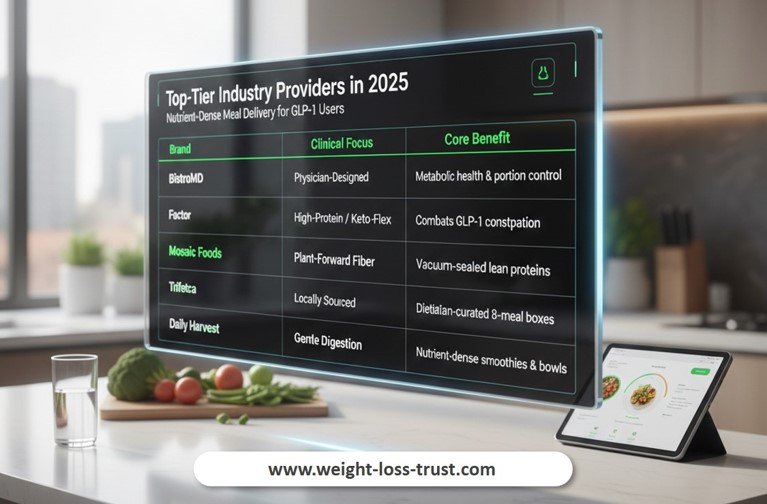
Several brands have emerged as leaders in the nutrient-dense meal delivery for GLP-1 users space, specifically tailoring their menus to clinical guidelines.
| Brand | Clinical Focus | Core Benefit |
| BistroMD | Physician-Designed | Offers a dedicated GLP-1 program focused on metabolic health and portion control. |
| Factor | High-Protein / Keto-Flex | Delivers dietitian-approved, heat-and-eat meals with 30g+ protein. |
| Mosaic Foods | Plant-Forward Fiber | High-fiber, plant-based bowls designed to combat GLP-1-induced constipation. |
| Trifecta | Muscle Preservation | Features vacuum-sealed, lean proteins for active users performing resistance training. |
8. Safety, Monitoring, and Clinical Integration
Meal delivery should be used as part of holistic clinical care, not as a replacement for medical supervision:
- Monitor weight trends, muscle mass, and micronutrient status regularly.
- Adjust meal plans as medications are titrated or discontinued.
- Address GI issues (nausea, constipation) with texture and timing modifications.
Healthcare professionals should oversee transitions between meal delivery plans and self-prepared diets to prevent unintended nutrient gaps.
9. Future Directions and Opportunities
- Standardized GLP-1 diet certifications could help consumers identify scientifically validated meal options.
- Integration with telehealth nutrition counseling offers support for adherence and symptom-driven adjustments.
- Research partnerships between providers and meal services can evaluate long-term outcomes on body composition, metabolic health, and quality of life.
FAQ (Frequently Asked Questions) – Maximizing Results on GLP-1 Therapy
Summary and Actionable Advice
Nutrient-dense meal delivery designed for GLP-1 users represents a convergence of clinical nutrition science, consumer demand, and innovative food service models.
Investing in a nutrient-dense meal delivery for GLP-1 users is a vital first step, but as you look toward the future, it is equally important to master GLP-1 weight maintenance strategies to ensure your metabolic success lasts long after the medication journey ends.
Selecting a is a strategic investment in long-term health. Avoid services that focus solely on “weight loss” or “low fat.” Instead, prioritize services that guarantee Nutritional Priorities to Support GLP-1 users with high protein counts (>25g per meal) and high fiber (>7g per meal).
By focusing on high-quality protein, fiber, balanced macronutrients, and micronutrient sufficiency, meal delivery solutions can support the unique dietary challenges of GLP-1 therapy—improving satiety, metabolic outcomes, and user satisfaction.
Successful programs blend evidence-based nutrition principles with practical delivery systems, customization, and ongoing monitoring, creating a comprehensive support ecosystem for individuals using GLP-1 medications.
As the “size of the pie” in the food industry shrinks due to reduced appetites, the “value of the bite” has never been higher.
By choosing a clinically informed food delivery service, GLP-1 users can ensure their weight loss journey is both sustainable and healthful.