
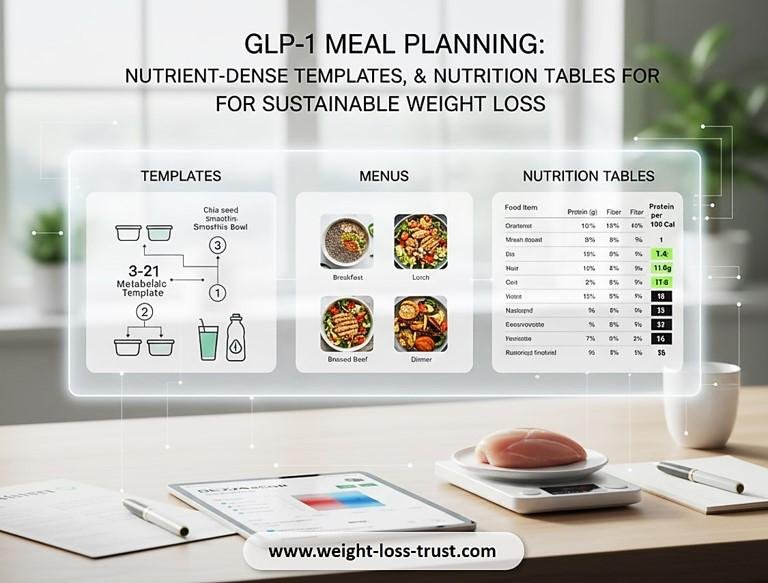
GLP-1 meal planning is a critical foundation for sustainable weight loss, helping users maintain protein intake, nutrient balance, and energy while using GLP-1 medications. The nutrient-dense templates, sample menus, and nutrition tables below are designed to support long-term results and metabolic health.
Table of Contents
Why GLP-1 Users Need a Different Meal Planning Strategy
Introduction
GLP-1 medications such as Ozempic, Wegovy, Mounjaro, Zepbound, and Saxenda fundamentally change how appetite, digestion, and nutrient absorption function.
While reduced hunger drives weight loss, it also increases the risk of protein insufficiency, electrolyte depletion, fatigue, and lean muscle loss when meals are not intentionally structured.
Traditional calorie-based diets are insufficient for GLP-1 users. What matters most is nutrient density per bite, meal timing independent of hunger signals, and protecting metabolic health while appetite is suppressed.
Nutrient-dense meal delivery for GLP-1 users like offer high-protein, portion-controlled, low-carb meals designed to support appetite regulation, muscle preservation, and stable energy levels.
This guide provides clinically informed, practical meal planning templates designed specifically for GLP-1 users.
Core Nutrition Principles for GLP-1 Users
Managing “The Big Three” Side Effects
The primary reason patients discontinue GLP-1 therapy is gastrointestinal distress. Read our deep dive on GLP-1 medication and GI side effects here to understand why these symptoms occur and how to manage them beyond just meal timing.
GLP-1 meal planning allows a specialized nutrient-dense meal delivery for GLP-1 users, where each meal is engineered to mitigate these side effects:
- Constipation (Reduced Motility): Clinical guidelines now recommend 25g–35g of fiber daily. Meal plans focus on “functional fibers” (lentils, chia, and cruciferous mash) that move through a slowed digestive tract more easily than raw, bulky salads.
- Nausea (Delayed Gastric Emptying): High-fat and ultra-processed foods sit in the stomach longer, causing reflux. Specialized meals use clean cooking methods—steamed, poached, or roasted—and avoid heavy industrial seed oils.
- Sulfur Burps & Bloating: By avoiding fermentable “trigger” ingredients and using smaller, calorie-dense portions, meal delivery reduces the “fermentation” time of food in the stomach.
The Clinical Crisis: Malnutrition in Obesity
A common misconception is that “any weight loss is good weight loss.” However, clinical trials in 2025 revealed a startling trend: without structured nutrition, up to 39% of weight lost on GLP-1s is lean muscle mass (Sarcopenia).
The “Nutrient Gap” Paradox
When GLP-1 medications suppress appetite, users often consume fewer than 1,200 calories per day. At this volume, it is mathematically difficult to meet the Body’s Recommended Dietary Allowance (RDA) for micronutrients.
- The Risk: Rapid weight loss combined with low nutrient intake can lead to “Ozempic face” (loss of structural facial fat and collagen), hair thinning, and debilitating fatigue.
- The Solution: Nutrient-dense meal delivery for GLP-1 users solves this by concentrating a day’s worth of essential vitamins—Zinc, B12, Iron, and Magnesium—into significantly smaller, bioavailable portions.
To make sure you meet the clinical benchmarks, adhere this structured framework with nutrient-dense meal delivery for GLP-1 users.
Related Reading: Don’t let stomach issues stop your progress. Read our deep dive on GLP-1 medication and GI side effects here.
Why Density Matters for GLP-1
There is a clear reason why nutrient-dense meal delivery is superior to standard “diet” meals for GLP-1 users. Traditional nutrition tables focus heavily on calories, often obscuring the nutrients that matter most when appetite is reduced.
In 2025, the medical community reached a historic consensus: GLP-1 therapy without intensive nutritional support is incomplete care.
A peer-reviewed study regarding “Sarcopenic Obesity” establishes that your focus on nutrient density is rooted in preventing medical complications.
To address this, we created the GLP-1 Density Matrix—a simplified framework that evaluates meals based on protein density per 100 calories, rather than calories alone.
In December 2025, the World Health Organization (WHO) and a joint advisory from the American Society for Nutrition (ASN) and the Obesity Medicine Association (OMA) emphasized that medications like semaglutide and tirzepatide must be paired with nutrient-dense, high-protein eating patterns to be truly effective and safe.
GLP-1 Meal Planning that strategically uses Nutrient-Dense Templates, Menus & Nutrition Tables to ensure sustainable weight loss, is the definitive, research-backed guide.
For GLP-1 users, nutrient-dense meal delivery is now considered the “gold standard” to safeguard clinically backed weight management.
This approach helps GLP-1 users quickly identify meals that maximize protein intake, preserve lean mass, and support satiety—key factors when choosing an effective nutrient-dense meal delivery service.
GLP-1 Density Matrix™ Table
| Meal Type | Calories | Protein (g) | Protein per 100 Calories | Satiety Value | GLP-1 Suitability |
|---|---|---|---|---|---|
| Grilled Chicken & Vegetables | 400 | 38 g | 9.5 g | High | Excellent |
| Salmon with Roasted Vegetables | 450 | 34 g | 7.6 g | High | Very Good |
| Turkey & Quinoa Bowl | 500 | 32 g | 6.4 g | Moderate | Good |
| Pasta with Cream Sauce | 600 | 18 g | 3.0 g | Low | Poor |
| Plant-Based Grain Bowl | 550 | 20 g | 3.6 g | Moderate | Limited |
| Typical “Diet” Frozen Meal | 350 | 14 g | 4.0 g | Low | Poor |
Protein-Focused Meal Planning
1. Protein Is The Non-Negotiable Lever for Muscle Preservation
To combat muscle wasting, the 2025 Clinical Advisory updated protein requirements for GLP-1 users.
The Strategy
Since you are eating less, your protein must be high-quality. Authority-level meal delivery services prioritize “Leucine-rich” proteins (like lean beef, poultry, and soy) which are the primary triggers for muscle protein synthesis.
GLP-1 appetite suppression often leads to unintentional protein under-consumption. Obesity Medicine Association – Nutritional Guidance for GLP-1 Patients
New Target: 1.2g to 1.5g of protein per kilogram of body weight (roughly 0.55g–0.7g per pound).
Target range:
- 1.2–1.6 g protein per kg of ideal body weight
- Minimum 25–35 g protein per meal
The “Protein-First” Nutrition Table
The GLP-1 “Protein First” nutrition table evaluates meals based on protein density per 100 calories, a more meaningful metric for GLP-1 users than calories alone.
This helps identify meals that support satiety, muscle preservation, and metabolic health despite reduced appetite.
| Food Item | Protein (g) | Fiber (g) | Protein per 100 Cal | GLP-1 Benefit |
| Lean Turkey & Quinoa | 32g | 6g | 11.4g | Muscle Preservation |
| Lentil & Spinach Stew | 18g | 12g | 7.2g | GI Motility / Constipation |
For GLP-1 users, meals with higher protein density per 100 calories deliver more nutritional value within smaller portions. Because GLP-1 medications suppress appetite, relying on calorie-focused meal plans often leads to inadequate protein intake, fatigue, and muscle loss. The GLP-1 Density Matrix™ shifts the focus from “how much you eat” to “how efficiently you nourish your body.”
2. Fiber Must Be Titrated
While fiber is essential, GLP-1 medications slow gastric emptying.
- Emphasize soluble, cooked, and fermented fibers
- Avoid large raw fiber loads early in treatment
3. Electrolytes Decline Quickly
Lower food volume = lower sodium, potassium, and magnesium intake, often presenting as fatigue, dizziness, or headaches.
Don’t let the ‘Ozempic zombie’ feeling stall your progress. Read our full guide on how to banish Ozempic fatigue with the top 5 electrolytes here.
4. Fat Volume Matters
Very high-fat meals can worsen nausea, especially with semaglutide-based medications.
GLP-1–Tailored Meal Plan Templates (Medication-Specific)
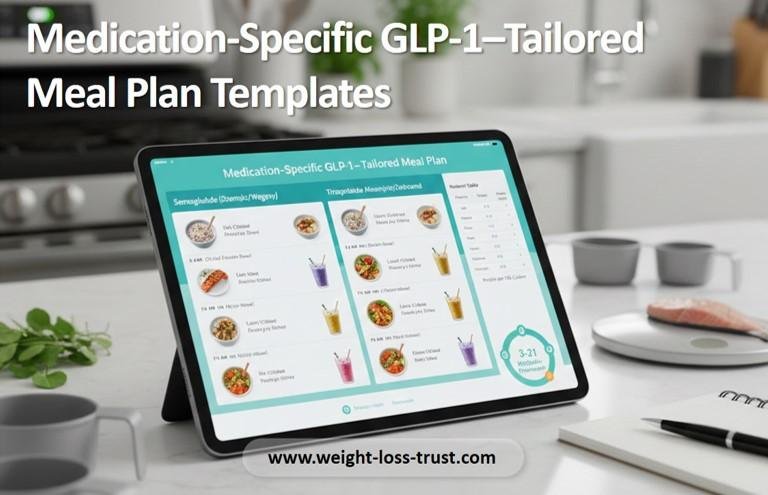
1. The “3-2-1” Meal Plan Template
Since volume is the enemy for those on semaglutide, a traditional “3 large meals” plan will fail. In this case the “3-2-1” Meal Plan Template will work much better.
What the 3-2-1 Method Means?
The 3-2-1 Meal Plan Template is a simplified daily structure designed specifically for GLP-1 users whose appetite and portion tolerance are reduced.
- 3 high-protein anchor meals
- 2 optional protein-forward snacks
- 1 protein-supported hydration or supplementation window
Rather than focusing on calories or meal timing rigidity, the 3-2-1 method prioritizes protein density, nutrient efficiency, and digestive comfort.
Suggestion: Create a “Volume-Adjusted Template” that breaks the day into:
3 Micro-Meals (from your nutrient-dense meal delivery for GLP-1 users box)
- Divide your high-protein delivery meals into three 300-calorie sittings. Focus on eating the protein first, then the fiber-rich vegetables.
2 Protein “Top-Offs”
- To reach the 1.2g/kg protein goal, add two small liquid or soft protein snacks (collagen coffee or Greek yogurt) between meals. This provides a steady stream of amino acids to protect muscle tissue.
1 Hydration Ritual
Drink 2 to 3 liters of water dailyelectrolyte-rich broth or herbal tea. GLP-1s increase the risk of dehydration, which mimics the feeling of “medication fatigue.”
Read more about: “Why the 3-2-1 Template structure ensures better nutrient distribution across the day, even when total food volume is low“.
Why the 3-2-1 Template Works for GLP-1 Users
GLP-1 medications reduce hunger and slow gastric emptying. While this supports weight loss, it also increases the risk of:
- Inadequate protein intake
- Lean muscle loss
- Fatigue and low energy
- Nutrient gaps due to smaller portions
The 3-2-1 structure ensures consistent protein distribution across the day, even when total food volume is low.
3 Anchor Meals (Protein First)
Each main meal should aim for:
- 25–40 g of protein
- Moderate fiber from vegetables
- Healthy fats in controlled portions
Examples:
- Eggs with sautéed vegetables and avocado
- Grilled chicken or turkey with greens and olive oil
- Salmon or lean fish with roasted vegetables
Anchor meals should always start with protein to maximize satiety and amino acid availability.
2 Optional Protein-Forward Snacks
Snacks are not mandatory but can help when appetite fluctuates or protein targets are hard to reach.
Each snack should provide:
- 10–20 g protein
- Minimal added sugars
Examples:
- Greek yogurt or skyr
- Cottage cheese
- Protein shake or collagen-enhanced smoothie
- Hard-boiled eggs
If appetite is very low, one well-chosen snack may replace both snacks.
1 Protein-Supported Hydration Window
GLP-1 users often experience dehydration or electrolyte imbalance. This “1” ensures hydration also contributes nutritionally.
Options include:
- Electrolyte water with added amino acids
- Collagen peptides mixed into water or tea
- Protein-enhanced coffee or tea
Target:
- 10–20 g additional protein, if needed
- Sodium, potassium, or magnesium as appropriate
Sample Day Using the 3-2-1 Template
| Time | Intake |
|---|---|
| Morning | Eggs with vegetables (30 g protein) |
| Mid-Morning | Greek yogurt (15 g protein) |
| Lunch | Chicken salad with olive oil (35 g protein) |
| Afternoon | Protein shake (20 g protein) |
| Evening | Salmon with vegetables (35 g protein) |
| Hydration | Electrolyte water + collagen (10 g protein) |
Total protein: ~145 g (adjustable per body weight)
Who the 3-2-1 Template Is Best For
- GLP-1 users struggling to eat enough protein
- Individuals experiencing fatigue or muscle loss
- Users relying on meal delivery or prepared foods
- Anyone seeking structure without calorie counting
Expert Tip
If you can only focus on one rule: prioritize protein at every eating opportunity. The 3-2-1 template simply makes that principle easy to follow, even on low-appetite days.
Medication-Specific Meal Plan Templates for GLP-1 Users
Semaglutide (Ozempic®, Wegovy®)
Best approach: Smaller, protein-dense meals with moderate fat.
High protein meal plan for Ozempic focus on medically recommended lean protein and fiber content at each meal. This help boost satiety and manage blood sugar, reduce side effects like nausea.
Daily structure
- 3 small meals + 1 protein snack
- Protein-first eating order
Tirzepatide (Mounjaro®, Zepbound®)
Best approach: Slightly higher protein tolerance, split fiber intake.
Daily structure
- 3 meals, optional snack
- Balanced macros
Liraglutide (Saxenda®)
Best approach: More frequent meals, gentler portions.
Daily structure
- 4–5 smaller meals
- Emphasis on digestibility
Sample Day
| Meal | Example | Protein |
|---|---|---|
| Breakfast | Greek yogurt + collagen + berries | 30g |
| Lunch | Grilled chicken, quinoa, zucchini | 35g |
| Snack | Protein shake | 25g |
| Dinner | Salmon, mashed cauliflower | 35g |
Nutrition Fact Tables for GLP-1 Users
Daily Nutrient Targets
| Nutrient | Recommended Intake |
|---|---|
| Protein | 90–130 g/day |
| Fiber | 20–30 g/day |
| Sodium | 2,300–3,000 mg/day |
| Potassium | 3,000–4,700 mg/day |
| Magnesium | 320–420 mg/day |
Sample Menus by Goal
Fat Loss + Muscle Retention
- Emphasize protein distribution
- Resistance training compatible nutrition
Fat Loss + Fatigue Prevention
- Electrolyte-rich foods
- Broths, soups, and mineral beverages
Weight Maintenance on GLP-1
- Gradual calorie normalization
- Continued protein priority
FAQ (Frequently Asked Questions): Mastering GLP-1 Meal Planning (PAA-Aligned)
HowTo: GLP-1 Meal Planning Framework – The “M.E.A.L.” Blueprint
This framework is designed to bridge the gap between medical weight loss and long-term metabolic vitality.
Our guide evaluates the most popular GLP-1-friendly meal delivery services, including a clear meal delivery comparison table to help you choose the best option for your goals.
M – Muscle Maintenance (The Priority)
Weight loss on semaglutide is fast, but without a specific protein strategy, you risk Sarcopenic Obesity—losing muscle instead of fat.
- The Anchor: 1.2g to 1.5g of protein per kilogram of body weight.
- The Rule: Eat your protein first. When you are on a nutrient-dense meal delivery for GLP-1 users, the protein is already pre-portioned. Consume the meat/tofu/fish before touching the sides to ensure your muscles are “fed” before you feel full.
E – Energy Density (The Bioavailability)
Since you can only eat small amounts, every bite must have a high “Nutritional ROI.”
- Focus: Avoid “volume fillers” like large salads or heavy breads. Instead, choose micro-concentrated foods like Greek yogurt, eggs, and lean medallions of meat.
- The Tactic: Use your nutrition tables to find foods with at least 10g of protein per 100 calories.
A – Avoiding Side Effects (The GI Guard)
Side effects are the #1 reason for stopping GLP-1 therapy. Your planning must anticipate them. For a comprehensive look at managing these symptoms, read our deep dive on GLP-1 medication and GI side effects here.
- Constipation: Plan for 25g–35g of fiber, but introduce it slowly.
- Nausea: Steer clear of “Trigger Foods”—greasy, spicy, or ultra-processed items. A nutrient-dense meal delivery for GLP-1 users uses clean roasting and steaming to keep meals light on the stomach.
L – Liquids & Hydration (The Motility Key)
Hydration is the “unsung hero” of GLP-1 success.
- The Rule: Separate liquids from solids. Drinking during a meal can cause the stomach to expand too quickly, triggering vomiting.
- The Ritual: Drink electrolyte-enriched water 30 minutes before or after your micro-meals.
Professional Pro-Tip: The “Thermal & Timing” Optimization
“Pivot to Chilled Proteins & the 7:00 PM Hard-Stop”
To maximize your nutrient-dense meal delivery for GLP-1 users, utilize these two high-level adjustments:
- Thermal Tolerance: If you experience “medication-induced scent sensitivity” or morning nausea, switch to chilled proteins. Research shows that cold lean poultry, hard-boiled eggs, or Greek yogurt are tolerated significantly better than hot, aromatic meals because they reduce the olfactory (smell) trigger that causes gag reflexes in GLP-1 patients.
- The Metabolic Curfew: Because these medications slow gastric emptying, a meal eaten at 9:00 PM may still be in your stomach at 2:00 AM, causing acid reflux and poor sleep quality. Finish your final ‘Micro-Meal’ by 7:00 PM to allow for the extended transit time, ensuring you wake up with a settled stomach rather than “morning heaviness.”
While nausea is the most reported side effect of these medications, it doesn’t have to be a dealbreaker. If you’re struggling to keep food down, we’ve developed a comprehensive GLP-1 meal planning nausea protocol that includes specific meal timing and bedtime snack strategies to settle your stomach.
Best Practices (Strategic Note):
- Set a daily protein floor
- Choose tolerated fiber sources
- Schedule meals independent of hunger
- Adjust fat and volume
- Monitor fatigue, digestion, and strength
To help you compare the top providers for weight loss, we’ve included a detailed meal delivery comparison table at that breaks down cost, protein content, and organic availability.
Conclusion: Beyond the Injection—Building a Lasting Foundation
GLP-1 success is not defined by appetite suppression alone. Structured nutrition preserves metabolic health, energy, and long-term results.
Achieving sustainable weight loss in 2026 is no longer about the sheer force of will; it is about the strategic synchronization of medicine and micro-nutrition.
By utilizing the “M.E.A.L.” Blueprint and integrating a nutrient-dense meal delivery for GLP-1 users, you are doing more than just suppressing your appetite—you are actively shielding your muscle mass and optimizing your metabolic health for the long term.
Finding the right nutrition plan is crucial for weight loss success, which is why many people are now turning to the best GLP-1 meal delivery services to ensure they are getting the high-protein, nutrient-dense calories required while on medication.
These templates, menus, and nutrition tables are not merely suggestions; they are the architectural plans for your “post-medication” life aligned with GLP-1 nutrition guidelines 2026.
As you continue to master these GLP-1 weight maintenance strategies, you transition from being a passive patient to an active architect of your own vitality.
Remember, the goal is not just to be smaller, but to be stronger, healthier, and fully nourished for the journey ahead.
Check This Out: Don’t let side effects derail your progress. Read our full GLP-1 meal planning nausea protocol to learn how to manage your diet for maximum comfort and weight loss.