
Struggling with GLP-1 food noise? Discover why hunger returns. Learn 5 ways to silence the chatter for good, regain control and lose weight.
Table of Contents
Why Food Noise Returns After GLP-1 Medications
You know that feeling when you’ve just finished a balanced dinner, but your brain is already screaming for a midnight date with a bag of chips?
That’s not a lack of willpower—it’s GLP-1 food noise.
If you’ve felt like your mind is a 24/7 diner that never closes, understanding the science of GLP-1 food noise is the key to finally hitting the ‘mute’ button on those intrusive cravings.
While many people think weight loss is just about “eating less,” those dealing with intense GLP-1 food noise know the battle is actually happening in the brain.
Understanding why this “food noise” happens and how to manage it is crucial for anyone who has used medications such as Mounjaro, Ozempic, or Wegovy, whether for weight loss or metabolic health.
According to the Cleveland Clinic, GLP-1 agonists mimic natural hormones to signal satiety to the brain.
Whether you are currently on medication like Ozempic or Wegovy, or you are looking for natural ways to quiet the internal chatter, mastering GLP-1 food noise is essential for long-term success.
In this guide, we’ll explore why GLP-1 food noise happens, why it often comes back, and the exact steps you can take to regain control of your appetite.
What Is GLP-1 Food Noise?
GLP-1 food noise refers to the heightened awareness of hunger, cravings, and preoccupation with food that occurs after discontinuing GLP-1 medications. While on the medication, appetite signals in the brain are dampened, satiety is enhanced, and the urge to eat is easier to manage. Once the medication is reduced or stopped, these signals return—often feeling louder and more urgent than before.
Typical manifestations of food noise include constant thoughts about food, urges to eat without hunger, difficulty stopping once eating begins, and strong cravings for highly palatable foods.
GLP-1 medications work by acting on the hypothalamus, slowing gastric emptying, and reducing dopamine response to food. Key physiological factors include:
- Appetite hormones such as ghrelin and leptin gradually normalizing
- Reactivation of dopamine-driven reward pathways
- Temporary amplification of metabolic defense mechanisms
When the pharmacological signal is removed, the brain must recalibrate, which can make cravings feel particularly intense.
Why Food Noise Comes Back After Stopping GLP-1s
Returning GLP-1 food noise is not a sign of personal failure; it’s a predictable biological process. When GLP-1 therapy ends, the body shifts from pharmaceutical appetite suppression to natural satiety signaling, which temporarily heightens hunger perception.
The main contributors to GLP-1 food noise are:
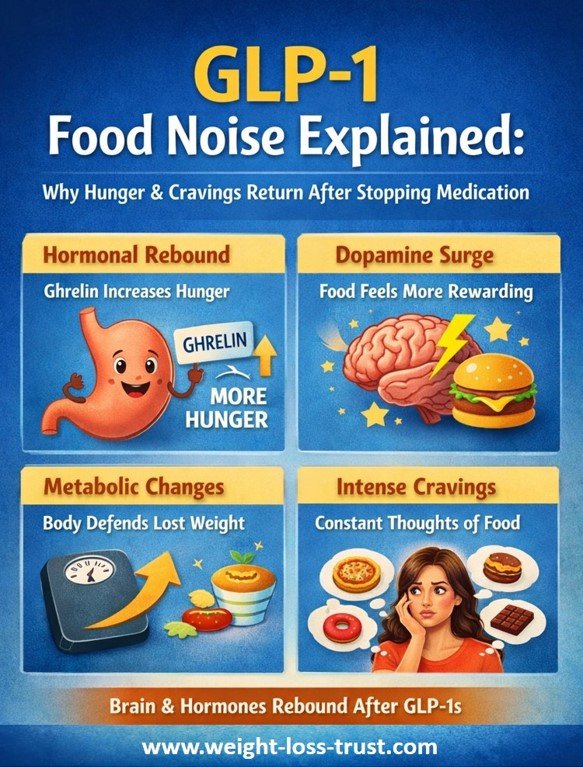
- Hormonal rebound – Ghrelin increases sharply, signaling stronger hunger.
- Psychological contrast – Hunger feels more intense compared to the quiet period on medication.
- Muscle mass and metabolism – Lean muscle loss can reduce resting metabolic rate, making hunger signals feel stronger.
Additional scientific mechanisms include:
- Metabolic adaptation – The brain defends higher body weight as a survival strategy.
- Tolerance (tachyphylaxis) – Over time, GLP-1 medications may be less effective, requiring dosage adjustments.
- Hormonal fluctuations – Stress, sleep deprivation, or menstrual cycles can temporarily amplify food cravings.
- Dose-end effects – Many patients notice increased hunger in the 24–48 hours before their next injection.
When Does GLP-1 Food Noise Return?
The biological reality of GLP-1 food noise is that these medications are like a volume knob, not a “delete” button.
When the medication levels in your bloodstream dip—whether due to a missed dose, your body adapting to a specific dosage, or coming off the treatment—the brain’s reward centers begin to shout again. Food noise generally reappears within 7–10 days after stopping GLP-1 therapy.
The return of GLP-1 food noise can be quicker with abrupt discontinuation and more gradual if the medication is tapered.
This is the critical window where appetite strategies must already be in place, as ignoring it can make initial rebound eating harder to control.
Studies show that without proper transition strategies, many individuals regain weight lost over months or even years. According to research from Penn Medicine, the suppression of GLP-1 food noise may only be temporary if the underlying metabolic signaling isn’t permanently altered.
Why Willpower Alone Doesn’t Work
It’s important to understand that food noise is hormonal and neurological, not a moral failing.
Willpower is finite, depletes under stress, and cannot override physiological hunger signaling.
Long-term success after GLP-1 therapy relies on biological replacements and structured strategies, not sheer restraint.
Strategies to Control GLP-1 Food Noise Naturally (Even After Stopping Medication)
Learning to manage GLP-1 food noise naturally is the ultimate ‘insurance policy’ for your weight loss journey.
Whether you are tapering off your dose or simply want to boost the medication’s effectiveness, you can lower the volume of GLP-1 food noise by prioritizing fiber and protein.
High-protein meals trigger your body’s natural satiety hormones, acting as a backup system when GLP-1 food noise starts to creep back in.
Additionally, sleep hygiene is non-negotiable; a tired brain is a loud brain, and nothing amplifies GLP-1 food noise faster than a spike in cortisol from lack of rest.
Managing food noise requires strategic nutrition, supplements, and low-intensity exercise.
The goal is to stabilize hunger, preserve lean mass, and support natural satiety.
To control GLP-1 food noise:
- Focus on consistent, balanced meals with protein, fiber, and healthy fats,
- Prioritize hydration, sleep, and stress management,
- Incorporate mindful eating and regular movement.
IMPORTANT: build non-food dopamine sources to replace food-related thoughts.
1. Protein Support for Appetite Control
Protein is the most effective non-pharmaceutical tool to regulate appetite. It stimulates natural GLP-1 release, preserves lean muscle, and prolongs feelings of fullness. Targeting 30–40 grams per meal helps maintain satiety and supports metabolism during the post-medication transition.
Practical recommendations:
- Include complete protein sources: eggs, fish, poultry, legumes
- Consider protein supplements if whole-food intake is insufficient during high appetite periods
- Choose supplements with ≥25g protein per serving, minimal sugar, and no stimulants
Protein Comparison Table
| Protein Source | Protein per Serving | Satiety Impact | Notes | Recommended |
|---|---|---|---|---|
| Chicken Breast | 25–30g | High | Complete protein, low fat | Shop Organic Chicken |
| Eggs | 6g per egg | Moderate | Good for breakfast/snacks | Organic Eggs |
| Greek Yogurt | 15–20g | High | Choose unsweetened | Unsweetened Greek Yogurt |
| Whey Protein | 20–25g | High | Convenient supplement | High-Quality Whey Protein |
| Lentils | 12–18g | Moderate | Plant-based, adds fiber | Organic Lentils |
Helpful Tip: For convenience, a high-quality whey protein or unsweetened Greek yogurt can help maintain satiety during intense food-noise periods.
2. Fiber Support
Soluble fiber slows digestion, prolongs fullness, and supports gut-derived satiety hormones. Fiber is not as potent as protein, but it smooths hunger spikes, particularly in the early weeks after discontinuing GLP-1 therapy.
Key fiber sources: psyllium husk, oats, lentils, vegetables, partially hydrolyzed guar gum. Introduce gradually to avoid digestive discomfort and ensure adequate hydration.
Fiber Comparison Table
| Fiber Source | Fiber per Serving | Benefits | Notes | Recommended |
|---|---|---|---|---|
| Oats | 3–4g per ½ cup | Soluble, promotes fullness | Breakfast staple | Organic Rolled Oats |
| Psyllium Husk | 4–5g per tsp | Delays digestion, regulates bowel | Mix with water | Psyllium Husk Powder |
| Vegetables (Broccoli, Spinach) | 2–4g per cup | Adds micronutrients | High-volume, low-calorie | N/A |
| Lentils/Beans | 6–8g per ½ cup | Slows digestion, adds protein | Plant-based dual benefit | Organic Lentils |
| Partially Hydrolyzed Guar Gum | 3g per tsp | Soluble, supports satiety | Gentle on digestion | Guar Gum Supplement |
Helpful Tip: Gradually adding soluble fiber from foods like oats or psyllium husk can make hunger signals feel steadier and more manageable.
3. Meal Support During High Food-Noise Periods
Meal replacements and structured mini-meals provide temporary stabilization during periods of overwhelming appetite or schedule disruptions. They should not replace whole foods long-term.
Meal Support Comparison Table
| Option | Protein per Serving | Fiber | Best Use Case | Notes | Recommended |
|---|---|---|---|---|---|
| Meal Replacement Shake | 20–25g | 3–5g | Quick, structured meal | Choose low-sugar options | Meal Replacement Shakes |
| High-Protein Bar | 15–20g | 3–4g | On-the-go snack | Avoid excess sugar or fat | High-Protein Bars |
| Prepackaged Balanced Meals | 25–30g | 4–6g | Lunch/dinner | Convenient, portion-controlled | Balanced Meal Delivery |
| Smoothie with Protein & Fiber | 20–25g | 5–8g | Breakfast or snack | DIY with fruits & vegetables | Protein & Fiber Smoothie Kit |
Helpful Tip: During periods of stronger appetite, a meal replacement shake, or high-protein bar can offer simple structure without complicating meals.
4. Exercise Support: Zone-2 Cardio
Zone 2 Cardio is a low-to-moderate intensity workout (60-70% of max heart rate) focused on aerobic fitness, mitochondrial health, and fat burning, characterized by being able to hold a comfortable conversation while exercising.
Brisk walking, easy jogging, or cycling at a sustainable pace build a strong aerobic base, improve metabolic health, and increase longevity by enhancing your cells’ energy production, making it a foundation for overall fitness.
Low-intensity aerobic exercise helps reduce appetite volatility by improving insulin sensitivity and promoting fat oxidation.
Recommended: 30–45 minutes, 3–4 times per week, conversational pace.
IMPORTANT: Avoid high-intensity exercise during early post-medication transition, as it can trigger rebound hunger.

People Also Ask / FAQ
Practical Daily Strategies
- Prioritize protein at every meal
- Include soluble fiber in at least one meal
- Plan structured meals and snacks
- Stay hydrated
- Include resistance training 2–3x weekly
- Use meal support shakes as needed
- Track hunger signals to notice patterns and triggers
Common Mistakes That Make Food Noise Worse

Several common mistakes can amplify “food noise”—the obsessive, intrusive thoughts about eating. These errors often involve ignoring the body’s natural signals and establishing unhelpful habits.
- Skipping meals
- Over-restricting calories
- Ignoring protein needs
- Excessive high-intensity exercise early in transition
- Expecting intuitive eating immediately
Avoiding these mistakes supports smoother transition off GLP-1 therapy.
Turning Down the Volume for Good
Understanding that GLP-1 food noise is a biological signal—not a character flaw—is the first step toward lasting freedom.
Whether you choose to stay on medication or transition to natural maintenance, your goal is to keep the conversation between your brain and your stomach as quiet as possible.
By implementing the strategies we’ve discussed in comprehensive GLP-1 maintenance guide, you can successfully manage GLP-1 food noise and focus on living your life without the constant distraction of the “next meal.” Remember, Weight Loss Trust is here to support you through every stage of this journey.
By understanding the mechanisms behind GLP-1 food noise and hunger rebound, strategically using protein, fiber, structured meals, and gentle exercise, you can regain control and maintain long-term weight management.
For the clinical exit strategy, see: Weight Loss Maintenance After Stopping Mounjaro (2025): The Clinical Exit Strategy That Actually Works
The key is preparation: those who anticipate food noise and implement structured strategies experience smoother transitions and lasting results.