
Affiliate Disclaimer: As an Amazon Associate, I earn from qualifying purchases.
Table of Contents
So, you’ve embarked on the GLP-1 journey. You’re ready for the “food noise” to vanish and the scale to move, but instead, you’re currently huddled on the bathroom floor wondering if your stomach has gone on strike. Welcome to the “Nausea Phase.”
Don’t panic! This isn’t a sign that the medication isn’t working—it’s actually a sign that your body is recalibrating.
However, you shouldn’t have to suffer through it. By implementing a solid GLP-1 meal planning nausea protocol, you can reclaim your day, your energy, and your dinner.

Why Does GLP-1 Cause Nausea? (The Science of the Slow-Down)
Before we dive into the food, we have to understand the “why.” GLP-1 medications work by slowing down gastric emptying.
This means food stays in your stomach longer, making you feel full. But if that food is heavy, greasy, or if your stomach is too empty, your brain sends a “System Error” signal in the form of nausea.
A proper GLP-1 meal planning nausea protocol isn’t just about what you eat; it’s about when and how you eat.
Normally, your stomach processes food and moves it into the small intestine relatively quickly. On these medications, that “conveyor belt” slows to a crawl. Clinical dietary recommendations for managing GLP-1 gastrointestinal symptoms suggest that food properties that you eat, and meal composition affect these symptoms.
This is great for weight loss because you feel full on less food, but if that food is heavy, greasy, or if your stomach is too empty and producing excess acid, your brain sends a “System Error” signal. That signal is nausea.
The Foundation: Your GLP-1 Meal Planning Nausea Protocol
When your digestion slows down, the old “three big meals a day” rule is officially retired.
If you try to eat a massive dinner, it’s going to sit in your stomach like a lead weight for hours. If you try to eat a 12oz steak and a side of fries, you’re going to feel it for the next 48 hours.
While the weight loss results are revolutionary, a deep dive into GLP-1 receptor agonists and their common side effects reveals that gastrointestinal distress remains the primary hurdle for patients, making a structured GLP-1 meal planning nausea protocol an essential tool for long-term adherence.
Nausea is just one piece of the puzzle. For a full breakdown of managing everything from fatigue to muscle preservation, check out our pillar resource on Mastering GLP-1 Side Effects: The Ultimate Success Manual.
Here is the blueprint for a successful GLP-1 meal planning nausea protocol:
1. The “Micro-Meal” Philosophy
Think of your stomach as a small funnel. You want a steady drip of nutrients, not a bucket-load all at once. Aim for five or six tiny “feeding windows” rather than large meals.
This prevents the stomach from becoming over-distended, which is a primary trigger for the queasiness associated with the medication.
2. The Protein First Rule
Every single time you put food in your mouth, protein must lead the way. Protein stabilizes blood sugar and preserves muscle mass (which is vital on GLP-1s). In our GLP-1 meal planning nausea protocol, we recommend reaching for “clean” proteins—think grilled chicken, white fish, or tofu—rather than fatty meats that are harder to digest.
3. The 20-Minute “Chew-Check”
Set a timer. Take a bite, chew until it’s practically liquid, and wait. If you eat too fast, you’ll hit a “wall” of fullness that quickly turns into nausea. By slowing down, you give your brain time to receive the satiety signals from your gut.
The Game-Changer: Bedtime Snacks for Nausea
One of the most common complaints I hear from patients is waking up at 3:00 AM with a sour, burning stomach. This often happens because your blood sugar has dipped too low, or because your stomach is producing acid with nothing to “work on.”
As part of your GLP-1 meal planning nausea protocol, a strategic bedtime snack is your secret weapon. You want something low-volume but high-protein. This keeps your blood sugar stable through the night and prevents “morning-after” sickness.
Top Bedtime Snack Recommendations:
- Low-Fat Cottage Cheese: Rich in casein protein, which digests slowly and keeps you steady until morning.
- A Spoonful of Greek Yogurt: The probiotics are a bonus for your gut health.
- Half a Banana with a Smear of Almond Butter: Gentle on the stomach and provides essential potassium.
- A High-Quality Protein Shake: Sip 4-6 ounces right before bed to keep the acid at bay.
If you aren’t a fan of cottage cheese, we recommend a scoop of Ascent Micellar Casein. It’s the cleanest casein we’ve found on Amazon and fits perfectly into our bedtime protocol to prevent 3:00 AM nausea.
Foods to Embrace (And the Ones to Ghost)
In any successful GLP-1 meal planning nausea protocol, your grocery list is your best defense.
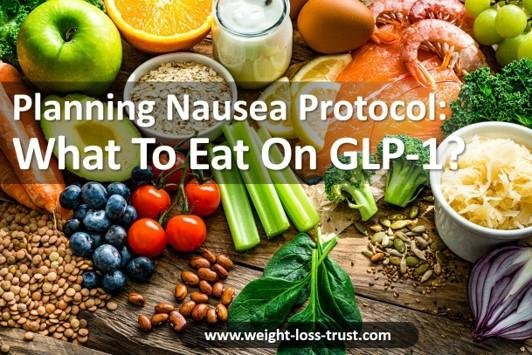
The “Green Light” Foods (Eat These!)
- Ginger and Peppermint: Whether it’s tea, lozenges, or fresh ginger in water, these are natural prokinetics (they help move things along).
- Cold, Crisp Foods: Many people find that hot, aromatic foods trigger nausea. Cold turkey roll-ups, chilled cucumber, or watermelon are often much easier to tolerate.
- Electrolyte-Rich Fluids: Dehydration mimics nausea. Using a sugar-free electrolyte powder once a day is a mandatory part of the GLP-1 meal planning nausea protocol.
The “Red Light” Foods (Avoid These!)
- Fried and Greasy Foods: Fat slows digestion even further. If you eat a greasy burger, it might sit in your stomach for 12+ hours, leading to the dreaded “sulfur burps.”
- High-Fiber “Cruciferous” Veggies: While broccoli and cauliflower are healthy, they can cause extreme bloating and gas when digestion is this slow. Steam them until they are very soft, or skip them during your “nausea days.”
- Carbonated Drinks: Bubbles add volume and gas to a stomach that is already struggling to move things along.
Proving the Myths Wrong: Why “Not Eating” is a Trap
I’m going to be firm here: Fasting through the nausea is a mistake. I often hear people say they’ll just skip food until the sick feeling passes. I’m here to tell you that this is the fastest way to make the nausea worse. When your stomach is empty, gastric acid builds up, and your blood sugar crashes—both of which are primary triggers for nausea.
It feels counter-intuitive, but eating a small, bland protein snack is often the only way to break the cycle. Following a consistent GLP-1 meal planning nausea protocol means fueling your body even when your appetite is low. If you’re struggling with this concept, you might want to review our Complete Guide to Starting GLP-1 Medications: What to Expect in Month One for a broader perspective on the adjustment period.
The Importance of Liquid Separation
Another nuance of the GLP-1 meal planning nausea protocol is how you hydrate.
You should never “chug” water during a meal. Why? Because you only have so much “real estate” in your stomach right now.
If you fill half of it with water, the food you eat has nowhere to go.
- The Rule: Stop drinking 30 minutes before you eat, and wait 30 minutes after you finish eating to resume drinking. This simple tweak can reduce post-meal nausea by up to 50%.
Avoid the sugary sports drinks. Instead, use LMNT Electrolyte Packets. They are a staple in any successful GLP-1 meal planning nausea protocol because they provide the salt your body craves without the ‘sugar crash’ queasiness.
A Sample Day on the Protocol
- 7:00 AM: 8oz water with electrolytes and a pinch of sea salt.
- 8:30 AM: Half a protein bar or one hard-boiled egg.
- 11:00 AM: 1/2 cup of bone broth (rich in collagen and easy on the gut).
- 1:30 PM: 3oz shredded chicken with a few slices of avocado.
- 4:00 PM: A few ginger snaps or a small green apple.
- 6:30 PM: Baked white fish with a small side of mashed sweet potato.
- 9:30 PM (Bedtime Protocol): A small protein shake or 1/2 cup of Greek yogurt.
FAQ: Navigating the Side Effects
To help your stomach move food along, try Zenwise Digestive Enzymes. They provide the extra help your gut needs when the medication slows things down too much.
Conclusion: Turning the Corner
Mastering the GLP-1 meal planning nausea protocol takes a little bit of trial and error.
You didn’t start this medication to feel miserable; you started it to transform your health.
Mastering the GLP-1 meal planning nausea protocol is the “price of admission” for some, but it is a manageable one.
Your body is going through a massive metabolic shift, and it’s okay to have “off” days.
Just remember: stay hydrated, prioritize protein, and never underestimate the power of a small bedtime snack.
By prioritizing protein, timing your hydration, and never skipping that bedtime snack, you’ll find that the nausea fades into the background, leaving you free to enjoy your results.
According to researchers at the Cleveland Clinic, nausea is often the primary reason patients discontinue treatment, which is why a proper GLP-1 meal planning nausea protocol is so vital for long-term success.