
Unlocking complete protein source for dedicated trainers.
If you are a muscle mass trainer in the gym, you probably know about the critical importance of nutrition in building muscle. After each workout, the micro-tears created in the muscle fibers demand immediate rebuilding, which is only possible by consuming high-quality protein sources.
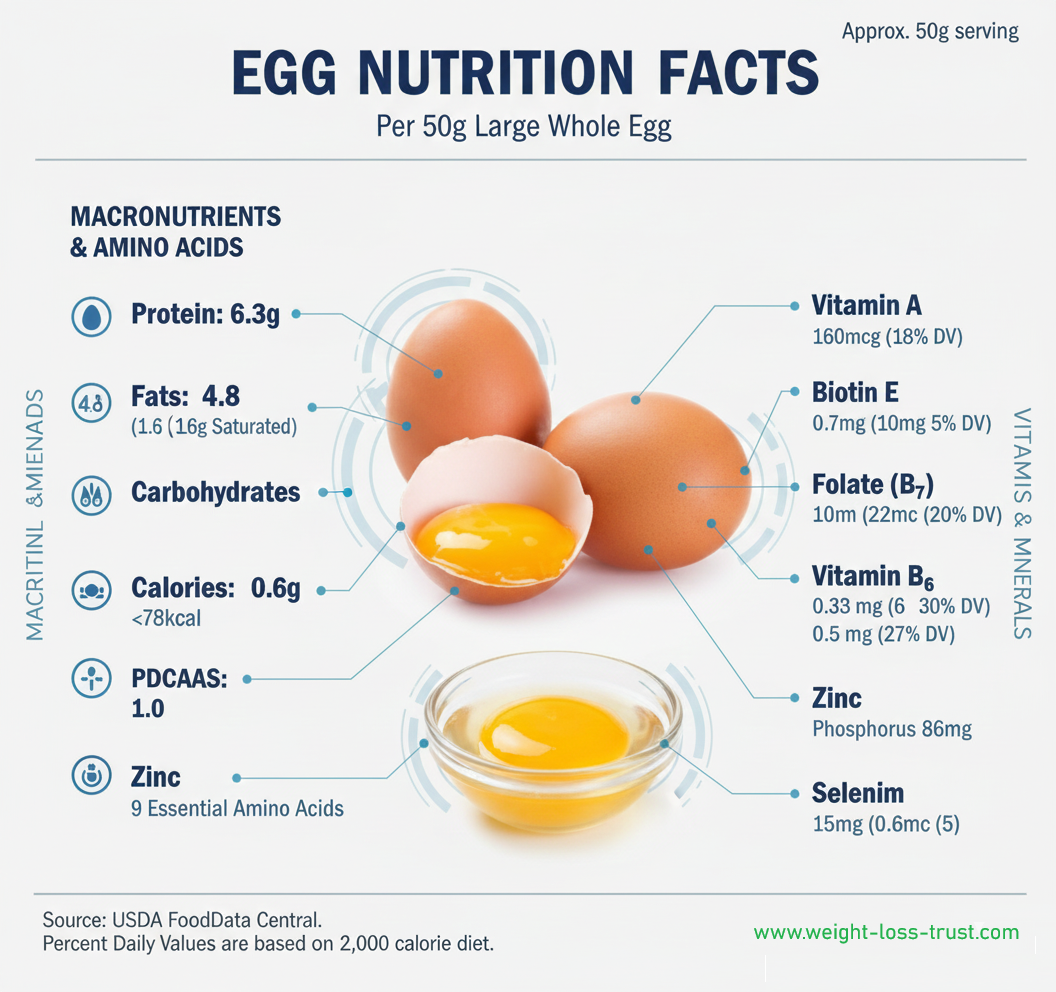
Eggs are considered the benchmark for protein quality. They provide approximately 6.3 grams of high-quality protein per large egg. More importantly, they are classified as a complete protein because they include all nine essential amino acids (EAAs) that the body cannot produce on its own.
Nutritional profile of eggs
One average sized chicken egg (boiled) contains:
72 kcal / 298 KJ
7.0g protein
4.8g fat
1.4g saturated fat
1.8g mono-unsaturated fat
0.8g poly-unsaturated fat
15 mcg folate
1.6mcg vit D
These nine acids—including the critical three Branched-Chain Amino Acids (BCAAs)—are the building blocks of muscle tissue, making their consumption especially critical for post-workout recovery.
Unlike many plant sources that often lack or are low in one or more of these EAAs, eggs contain all of them in a near-perfect ratio.
This is why eggs score a Protein Digestibility Corrected Amino Acid Score (PDCAAS) of 1.0, which is the highest possible rating, indicating maximum protein utilization by the human body.

The Yolk Debate: The Numbers Don’t Lie
Many exercisers still ask whether it is better to eat just the egg white or the whole egg. The data strongly supports consuming the whole egg for greater benefit:
- Protein Distribution: A large egg white contains about 3.5 grams of protein, while the yolk contains about 2.8 grams of protein.
- Nutrient Concentration: While the yolk adds roughly 4.5 grams of fat and about 60 calories (bringing the total egg calorie count to approximately 80 calories), it is also the source of almost all the egg’s critical micronutrients.
- Vitamins and Minerals: The yolk contains 100% of the egg’s Vitamin D and Choline. Choline is essential for brain health and metabolism, and a single egg provides over 147 milligrams of it.
Nutritional Differences: Egg White vs. Yolk
Eggs are nutritionally dense, but their key components are split between the white and the yolk. While the egg white is primarily water and protein, the yolk is a concentrated source of fats and micronutrients.
| Component | Key Nutrients & Characteristics |
| Egg Yolk | Contains nearly half of the egg’s total protein, but is most notable for housing all of the fat-soluble vitamins (A, D, E, and K), essential fatty acids, and powerful antioxidants such as lutein and zeaxanthin. |
| Egg White | Supplies over half of the egg’s total protein. It is fat-free, cholesterol-free, and consequently much lower in calories than the yolk. |
Key Nutritional Breakdown (Per Large Egg)
- Total Protein: 6.3g (3.5g in white, 2.8g in yolk)
- Calorie Density: 80 Calories (60 in yolk)
- Essential Nutrients: 147mg+ Choline, 100% of Vitamin D.
Eating the whole egg contributes to better overall health and improved absorption of the complete protein and fat-soluble vitamins.
Only in cases of an extremely low-fat diet does the marginal calorie difference make separating the egg white worthwhile.
Flexibility, Availability, and Cost-Effectiveness
Another significant advantage of eggs is their incredible flexibility; they fit into almost any type of meal plan. They can be prepared hard and consumed immediately after training, added to an omelet in the morning, or blended into other dishes.
In terms of cost-effectiveness, it is difficult to compete with the sheer value eggs offer:
- Protein Value: Four eggs provide approximately 25-28 grams of high-quality protein.
- Unbeatable Price: Based on the market average, these four eggs cost only between 4 and 5 shekels.
This low cost-per-gram of protein is a significant advantage for those who exercise regularly and need to maintain a high-protein diet without over-burdening their budget.
Its high availability in virtually every supermarket, at any time, also solidifies its place as an essential component of the daily menu for exercisers worldwide.
How many eggs are safe to eat?
Current scientific literature often concludes that a low-to-moderate intake of eggs, defined as up to one egg per day, can be integrated effectively within a comprehensive, healthy dietary pattern.
Are Eggs Safe for Everyone? Addressing Key Concerns
The safety of egg consumption centers on two primary issues: bacterial contamination (Salmonella) and common food allergies.
1. Reassessing Salmonella Risk
Historically, a major concern surrounding eggs was the risk of Salmonella poisoning, especially when eggs were consumed raw or lightly cooked.
However, recent updates to food safety standards have significantly mitigated this risk. Following improvements in production protocols, the Food Standards Agency (FSA) has revised its guidelines.
Current recommendations now confirm that vulnerable groups—including infants, children, pregnant women, and the elderly—may safely consume raw or lightly cooked eggs.
2. Egg Allergies
Another critical safety consideration is that eggs are a common food allergen, particularly among infants and toddlers.
While the majority of children successfully outgrow this allergy by the time they enter school, some cases can persist into later childhood and, occasionally, into adulthood.
If you suspect an egg allergy, professional medical consultation is advised.
Frequently Asked Questions (FAQ)
Q1: What exactly makes an egg a “complete protein”?
A: A protein is considered “complete” when it contains all nine essential amino acids (EAAs) that the human body cannot produce on its own. Eggs provide all nine of these EAAs in sufficient amounts, making them one of the highest-quality, most bioavailable protein sources available for muscle synthesis and bodily repair.
Q2: How do the costs of eggs and whey protein compare for muscle building?
A: On a macro-level, eggs are generally far more cost-effective per gram of quality complete protein. While a high-quality whey isolate may be slightly more convenient, eggs deliver approximately 6 grams of complete protein for just a few cents, making them an unparalleled budget choice for trainers focused on maximizing their protein intake without breaking the bank.
Q3: Should I avoid egg yolks due to their cholesterol content?
A: For the vast majority of healthy individuals, dietary cholesterol from eggs has a minimal impact on blood cholesterol levels. The yolk is highly nutritious, containing half the protein of the egg, vital B vitamins, Vitamin D, and healthy fats. Unless advised otherwise by a doctor, consuming whole eggs is recommended to gain the full nutritional benefits required for energy and recovery.
Q4: How many eggs are optimal for muscle growth per day?
A: This depends entirely on your total daily protein needs, which are dictated by your body weight, activity level, and training goals. For a trainer, a good starting point might be 3-6 whole eggs daily, ensuring they fit within your overall calorie and macro budget, and are balanced with other protein sources.
Q5: Is there an optimal time to eat eggs for post-workout recovery?
A: The most crucial factor is hitting your daily complete protein target. However, consuming 3-5 eggs (or a meal containing them) within the 1-2 hour post-exercise window helps provide a rapid supply of EAAs to jumpstart the muscle repair and synthesis process.
Conclusion
Ultimately, an egg is not just another protein source; it is a nutritional powerhouse. It provides broad support for the body: supporting muscle growth, enhancing recovery with a PDCAAS of 1.0, maintaining a feeling of satiety, and strengthening various body systems via its micronutrient content.
It is effective, natural, research-based, and delivers maximum complete protein bang for minimal shekel—and that is why it has been considered, for decades, one of the most basic and important foods for anyone who exercises and wants to get the most out of their training.
Please note: Everything stated in this article is for enrichment only. Before you choose a training program or diet of one kind or another, you should consult a qualified professional who will adapt your training to your current health and fitness status.
Writer Phyllis Leonard has been editing the Health and Fitness section on the site since it was launched in 2006.