
Last updated: December 2025
Table of Contents
Introduction: Moving Beyond Quick Fixes
When embarking on a health journey, making informed decisions is critical, especially when selecting a structured regimen. Our essential guide teaches you how to confidently Vet Weight Loss Program claims, ensuring they meet the highest standards of safety, science, and medical trust.
Selecting the right approach requires diligence, as the industry is saturated with options that promise fast results but often lack scientific backing or long-term sustainability. Learning to critically assess a Vet Weight Loss Program using a reliable checklist can be the single most important step toward achieving your goals safely.
The most successful weight management strategies are built on a foundation of trust: trust in the science, trust in the process, and trust in the sustainability of the habits.
This Trust-Centric Checklist provides essential criteria for evaluating any weight loss program, ensuring it prioritizes your long-term health over short-term results.
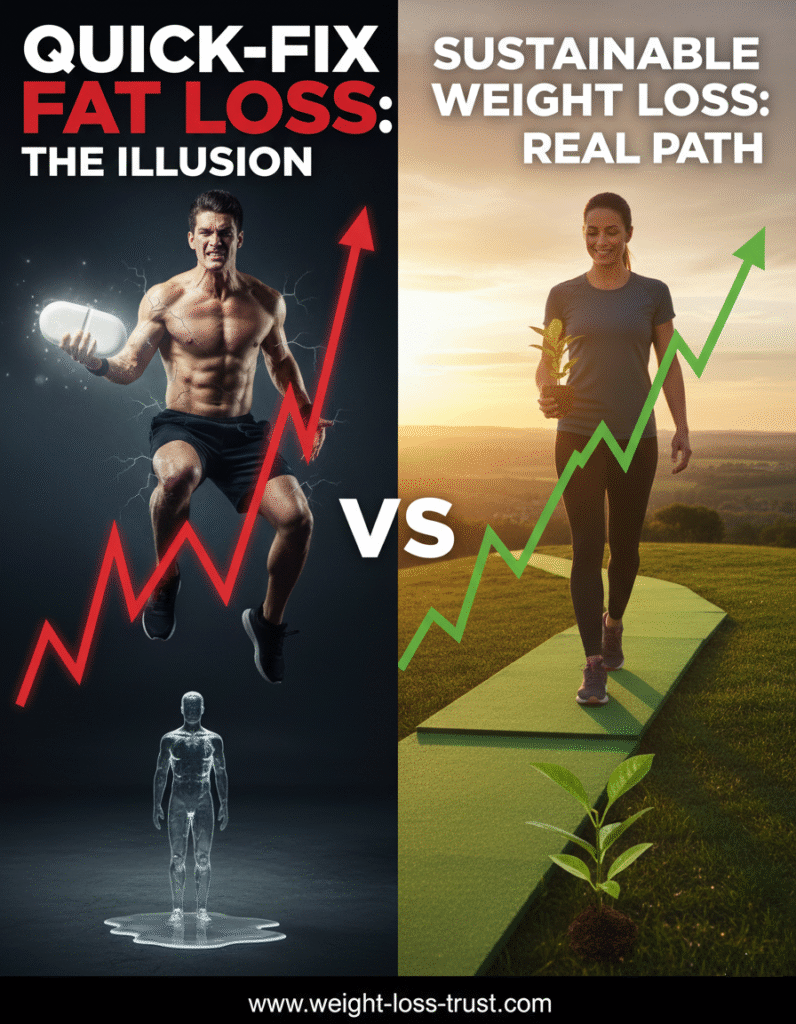
Quick-Fix Fat Loss Illusion vs. Real Path to Sustainable Weight Loss
Part 1: Scientific Scrutiny: How to Vet Weight Loss Program Claims
The first step in due diligence is running a comprehensive check on the program’s foundation. You need a systematic way to Vet Weight Loss Program methodologies and their underlying principles, focusing on safety and sustainability above all else.
Starting a weight loss journey is an act of hope, but the sheer volume of fad diets, unsupported supplements, and quick-fix programs can be overwhelming and, worse, ineffective in the long run. Metabolic adaptation and weight regain are common outcomes of approaches that focus solely on restriction.
The cornerstone of a trustworthy program is its basis in established physiological and nutritional science.
1. Evidence and Data
A legitimate weight loss program must be able to present verifiable evidence of its efficacy, not just emotional testimonials.
- Peer-Reviewed Studies: Search for the program’s methodology or proprietary products in reputable medical journals. If the only proof is anecdotal or based on internal, unpublished data, it’s a significant cause for concern.
- Realistic Outcomes: Be wary of programs promising dramatic weight loss (e.g., 50+ pounds in a month). Sustainable, healthy loss is typically 1-2 pounds per week. Always inquire about the program’s long-term follow-up data—what percentage of participants maintain their loss after one year?
- Must be Rooted in Caloric Deficit: The program should explicitly define how it achieves a safe, moderate caloric deficit (typically 500-750 calories per day) without resorting to extreme starvation.
- Focus on Macronutrient Balance: It must promote a balanced intake of all macronutrients (protein, fats, and carbohydrates) appropriate for the individual’s health status and goals, rather than eliminating entire food groups.
- Avoid Proprietary “Magic” Formulas: Be wary of programs that rely on secret ingredients, unproven pills, or supplements marketed with pseudo-science. Reputable programs teach you how to eat, not what pills to take.
2. Medical Oversight
The qualifications of the team running the program are just as important as the diet plan itself.
- Credentialed Coaches: The program staff or coaches should possess recognized professional credentials. Look for Registered Dietitians (RD), certified clinical professionals, or recognized fitness certifications (e.g., NASM, ACE) with specialized experience in weight management. Titles like “Nutrition Coach” or “Wellness Guru” are often unregulated and insufficient for medical guidance.
- Medical Screening: A safe program should require or recommend a medical screening before participation, especially for individuals with pre-existing conditions (diabetes, heart disease, etc.).
- Personalization: A credible program understands that weight loss is not one-size-fits-all. They will take a detailed medical history, assess current medications, and tailor recommendations.
- Programs that hand out generic plans often fail to effectively Vet Weight Loss Program participants for underlying health conditions or specific metabolic needs.
Part 2: Sustainability and Lifestyle Integration
A program fails if you cannot maintain its principles after the official period ends. Sustainability is the ultimate measure of success.
3. Rate of Weight Loss
- The Safe Pace: The recommended rate of loss should be realistic: 1 to 2 pounds (or 0.5 to 1 kg) per week. Faster loss often indicates significant water or lean muscle mass loss, which is detrimental to metabolism.
- Addresses Metabolic Adaptation: A good program acknowledges the reality of metabolic plateaus, supports mindful eating and includes strategies to counteract them, such as calorie cycling, strategic refeeds, or increased resistance training.
4. Psychological and Behavioral Components
- Teaches Habit Formation: Look for programs that teach behavioral science principles—like habit stacking or identifying triggers—rather than just providing a meal plan.
- Focus on Relationship with Food: The program should encourage a healthy, non-restrictive relationship with food. It should not label foods as “good” or “bad,” which can lead to cycles of guilt and binge eating.
5. Physical Activity and Fitness
- Promotes Resistance Training: The program should strongly integrate resistance (strength) training to preserve and build lean body mass, which is crucial for maintaining a healthy Resting Metabolic Rate (RMR).
- Flexibility: It should offer flexible activity guidelines that can be integrated into a busy schedule, not just mandate grueling, unsustainable workouts.
Part 3: The Trust-Centric Checklist: Red Flags vs. Green Lights
Be vigilant for these signs that a program might be a short-term fix or, worse, potentially harmful.
Red Flags: Identifying Quick-Fix Illusions
Avoid programs that rely on unsustainable or medically questionable tactics. These programs often prioritize rapid, temporary scale movement over genuine, lasting health improvement.
- Extreme Caloric Restriction: Any diet that requires consuming less than 1,000–1,200 calories per day without constant, explicit medical supervision is dangerous, slows metabolism, and is almost certainly unsustainable.
- “Magic” Pills or Supplements: Be highly skeptical of proprietary blends lacking transparent ingredient disclosure. Claims of rapid fat burning without diet or exercise modification are nearly always false.
- Exclusion of Entire Food Groups: Programs that completely ban major macronutrients (like all carbohydrates or all fats) are difficult to maintain and can lead to severe nutrient deficiencies.
- High Upfront Costs or Hard Sells: Aggressive sales pitches, pressure tactics, and non-refundable fees are warning signs that the program may prioritize profit over patient care.
| Red Flag | Trust Warning | Why It’s Dangerous |
|---|---|---|
| “Lose 10 Pounds in 7 Days” | Promises rapid, unrealistic results. | Weight loss this fast is usually water, glycogen, or muscle mass, leading to quick rebound (yo-yo dieting). |
| “Detoxes” or “Cleanses” | Recommends specific powders, expensive juices, or extreme restriction periods. | The body detoxifies itself naturally. These methods lack nutrients, deplete energy, and often lead to nutrient deficiencies. |
| One-Size-Fits-All | Offers the exact same plan or meal schedule to every client regardless of age, sex, activity level, or health history. | Personalization is key. A safe program customizes caloric targets and macronutrient distribution. |
| Mandates Supplements | Requires you to purchase its specific, branded supplements for success. | Reputable programs prioritize whole foods. Required supplements often add unnecessary cost and are rarely evidence-based. |
| Excludes Exercise | Suggests you can achieve results solely through diet without any physical activity. | Exercise (especially resistance training) is vital for metabolic health, muscle preservation, and long-term maintenance. |
Green Lights: Signs of a Sustainable Program
A truly effective program should focus on education, lifestyle change, and long-term well-being. When you Vet Weight Loss Program providers, look for these indicators of credibility and long-term success potential.
- Focus on Behavior Change: The program teaches sustainable habits, such as portion control, mindful eating, stress management, and finding joy in regular physical activity.
- Nutrition Education: It offers clear, science-based guidance on balanced eating tailored to individual needs, rather than a generic or temporary meal plan.
- Psychological Support: It recognizes the essential mental health component of weight management and offers counseling, behavioral coaching, or robust support group resources.
- Medical Integration: The program actively encourages and facilitates communication and collaboration with your primary care physician or a registered dietitian.
3. Long-Term Viability and Maintenance
The ultimate measure of success is not how much weight you lose, but how effectively you keep it off. Therefore, the key component to truly Vet Weight Loss Program options is assessing their post-program maintenance strategy.
- Transition Strategy: Does the program have a structured transition phase to help you move away from the diet and into an autonomous, balanced lifestyle without rigid constraints?
- Cost vs. Value: Consider the long-term cost. Is the program teaching you skills for life, or creating a financial dependency on expensive proprietary products, shake replacements, or continuous high-fee subscriptions? A program that teaches self-sufficiency is always the better investment. This crucial step is essential when you Vet Weight Loss Program value.
By employing this systematic, evidence-based approach, you empower yourself to confidently Vet Weight Loss Program options and choose a regimen that is medically sound, scientifically supported, and designed for lasting success.
Don’t fall for the illusion of quick fixes; choose the real path to sustainable health.
Conclusion: The Final Trust Assessment
A successful weight loss program is not a temporary diet; it is an educational experience that provides you with the skills to manage your health for a lifetime.
Before committing, ask yourself these final questions:
- Can I see myself eating this way one year from now? (Tests sustainability)
- Does this program make me feel empowered or restricted? (Tests psychological health)
- Is the underlying science explained clearly and transparently? (Tests validity)
By employing this systematic, evidence-based approach, you empower yourself to Confidently Vet Weight Loss Program options and choose a regimen that is medically sound, scientifically supported, and designed for lasting success.
Don’t fall for the illusion of quick fixes; choose the real path to sustainable health.