
Ashwagandha is widely used in Ayurvedic medicine. For this reason, Ashwagandha for Cortisol and Weight loss, is gaining recognition for its potential to support weight management, especially in regulation of cortisol levels and stress management.
Table of Contents
Review: Ashwagandha for Stress, Cortisol, and Weight Management
Want to stop stress-eating? Our CNS Vetted Trust Test analyzes supplement Ashwagandha for Cortisol and Weight Loss and analyzed the science of Ashwagandha (KSM-66 vs. Sensoril) to find the best cortisol-reducing supplement for sustainable weight management.
1. Introduction: The Weight-Loss Enemy You Can’t Out-Diet
You can manage your diet and exercise perfectly, but if your life is dominated by stress, your body has a built-in mechanism designed to defeat weight loss: Cortisol.
Cortisol, the primary stress hormone, doesn’t just make you feel wired; it fundamentally alters your metabolism, prioritizing the storage of fat around your midsection and triggering powerful cravings (Behavioral Psychology Pillar). This is the key reason why “quick fixes” fail—they ignore the body’s internal control center.
The solution lies in restoring balance to the body’s stress response. We applied our rigorous Vetting Checklist to analyze the world’s most powerful adaptogen: Ashwagandha.
We recommend only the standardized, clinically studied extracts that pass our Hormonal Health and purity tests.
2. The Science of Stress-Eating: How Cortisol Controls Your Cravings
Ashwagandha (Withania somnifera) is classified as an adaptogen—a class of herbs that helps the body “adapt” to physical and mental stress by modulating the Hypothalamic-Pituitary-Adrenal (HPA) axis.
The Vicious Cycle: Stress, Cortisol, and Visceral Fat
When you are chronically stressed, the HPA axis is constantly “on,” leading to excessive cortisol secretion. This has three primary metabolic effects that sabotage weight loss:
- Increased Visceral Fat: Cortisol tells your body to move energy (fat) toward your torso and abdomen, the most metabolically damaging type of fat.
- Blood Sugar Spikes: Cortisol increases blood sugar (to give you energy to flee a perceived threat), leading to chronic insulin spikes and, eventually, Insulin Resistance.
- Stress-Related Eating: Studies show Ashwagandha can reduce stress-related food cravings by up to 32.7%, targeting the emotional and hormonal component of overeating.
Ashwagandha’s Role: Modulating the HPA Axis
The active compounds in Ashwagandha, called withanolides, are what deliver the benefit. Clinical trials have repeatedly shown that consistent use of a standardized extract can significantly reduce serum cortisol levels—with reductions ranging from 11% to over 32% in stressed individuals over 6-8 weeks.
3. The Trust Test: KSM-66 vs. Sensoril vs. Standardized Extracts
This is the most critical section. The vast majority of cheap Ashwagandha products fail our Vetting Checklist because they use simple powder or non-standardized blends, meaning you have no idea how much of the active ingredient (withanolides) you are actually getting.
| Vetted Extract | Primary Focus | Active Compound Standardization | Rationale for CNS Approval |
| KSM-66 | Chronic Stress, Cognitive Function, & Physical Performance | Full-spectrum root extract, standardized to $\ge 5\%$ total withanolides. | The most heavily studied form for general stress and cortisol reduction. Ideal for daily, long-term balance. |
| Sensoril | Acute Stress, Sleep Quality, & Anxiety | Standardized to a higher concentration of withanolide glycosides (closer to 10%). | Includes both root and leaf extracts. Often preferred for its noticeable effect on calmness and sleep onset. |
The Non-Negotiable Warning: Why Purity Matters
If the label simply says “Ashwagandha Powder” or “Root Extract” without citing a patented name or the withanolide percentage, it fails the Vetting Checklist.
These generic powders typically contain less than 2% withanolides and may not provide a therapeutic dose.
4. CNS-Vetted Product Recommendations
We recommend choosing a product that uses the KSM-66 extract, as it has the deepest body of research for overall stress and weight management, followed by a quality, standardized option.
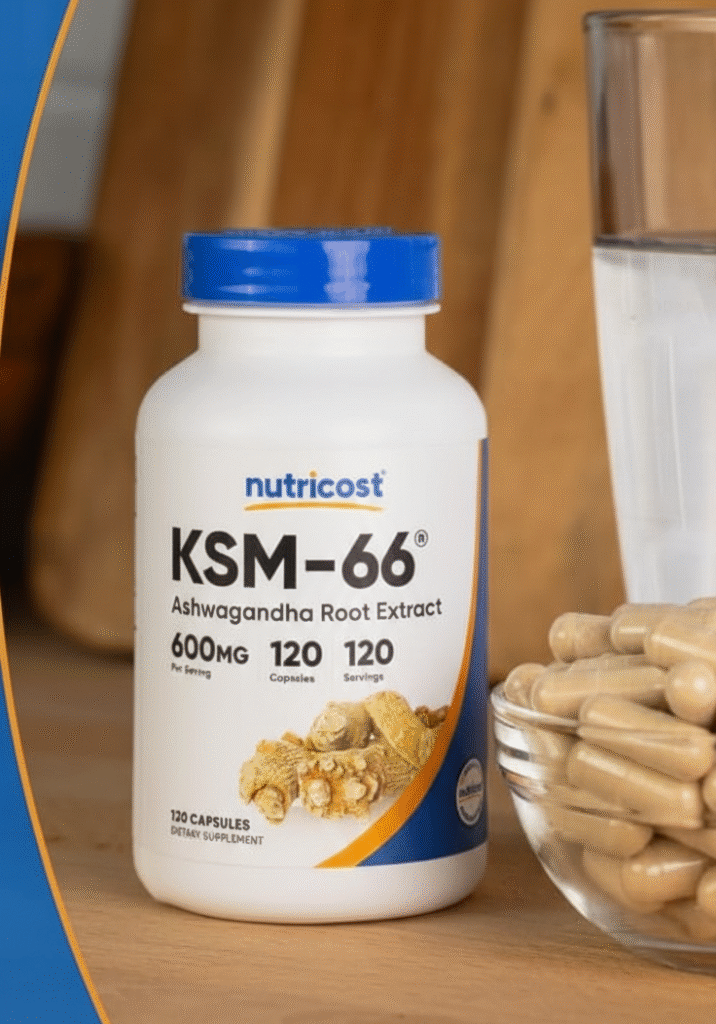
🥇 Best Overall (Clinically Tested): KSM-66 Ashwagandha
The Vetting Pass: These brands consistently use the clinically studied, patented KSM-66 extract, ensuring the consumer receives the exact dosage and standardization that was effective in research.
Key Takeaway: Recommended for individuals dealing with chronic stress, stress-related belly fat, and high morning cortisol.
See Price on Amazon: KSM-66 Ashwagandha Supplement ->
🥈 Best Budget/Purity Option: NOW Supplements Ashwagandha Extract
The Vetting Pass: NOW is consistently GMP Quality Assured (passes our manufacturing standard) and clearly labels its extract standardization (often $1.5\%$ Withanolides for this formula), offering a reliable, cost-effective dose for those new to the supplement.
Key Takeaway: An excellent starting point for general stress support, provided you follow the label’s dosing instructions.
See Price on Amazon: NOW Supplements Ashwagandha Extract ->
5. Final Verdict: The CNS Guide to Dosage and Timing
Optimal Dosage and Timing
| Goal | Recommended Daily Dosage | Optimal Timing (CNS Advice) |
| Cortisol & Stress Reduction | 500-600 mg of standardized extract (KSM-66) | Split into 300mg in the morning (to reduce the daily cortisol peak) and 300mg in the late afternoon (to aid relaxation). |
| Sleep Quality | 600 mg of standardized extract | All in the evening, 1 hour before bed (Often Sensoril is preferred for this goal). |
6. Frequently Asked Questions (FAQ)
Q1: Should I take Ashwagandha in the morning or at night for weight management?
A: The optimal timing depends on your primary goal, but for weight management, a split dose is often recommended.
- Morning Dose: Taking 300mg in the morning can help regulate the cortisol peak (the natural morning rise), leading to sustained energy and focus, and reducing daytime anxiety that triggers stress eating.
- Evening Dose: Taking 300mg in the late afternoon or evening can help reduce evening cortisol spikes and promote relaxation, which is critical for sleep quality—a vital factor in weight regulation and hormonal balance.
Q2: Does Ashwagandha affect my thyroid or blood pressure medication?
A: Yes, it can, and you must consult your physician.
- Thyroid: Ashwagandha may increase thyroid hormone levels (T3 and T4). If you are on Levothyroxine (thyroid hormone replacement) or have a thyroid condition, taking Ashwagandha could lead to an unsafe level of hormones (thyrotoxicosis).
- Blood Pressure & Sedatives: Ashwagandha has natural calming and blood-pressure-lowering effects. Combining it with prescribed blood pressure medication or sedatives (like Xanax or Ambien) could cause dangerously low blood pressure or excessive drowsiness.
Q3: Is KSM-66 or Sensoril extract better for sleep?
A: Both are excellent standardized extracts, but they have subtle differences:
- KSM-66: A full-spectrum root extract (standardized to 5% withanolides) with a deeper body of evidence for reducing chronic stress and overall cortisol levels. It is the best choice for general, long-term balance.
- Sensoril: Often standardized to a higher concentration of withanolide glycosides (closer to 10%) and includes both root and leaf extracts. Anecdotally, many users report Sensoril having a more noticeable effect on acute anxiety and sleep quality, making it a strong evening choice.
Q4: Why does the Vetting Checklist require a standardized extract?
A: Standardization is the core of our Vetting Checklist. The therapeutic benefits of Ashwagandha come specifically from its active compounds, the withanolides.
If a product does not specify the percentage of withanolides (usually 1.5% to 10%), you are likely getting a low-potency, unverified powder. Our review only recommends standardized extracts (like KSM-66) to ensure the product meets the effective dosage used in clinical trials.
Q5: Can Ashwagandha cause side effects?
A: When taken at the recommended dose, side effects are usually minimal. In large doses, some people may experience stomach upset, nausea, or diarrhea. More importantly, you should immediately discontinue use and consult a physician if you have an autoimmune condition (like Lupus, Rheumatoid Arthritis, or Multiple Sclerosis), as Ashwagandha may increase immune system activity and worsen symptoms.
⚠️ Critical Safety & Contraindications (Non-Negotiable)
As part of our commitment to safety and expertise, we must flag crucial warnings. Always consult your physician before starting Ashwagandha.
- Autoimmune Conditions: Ashwagandha may increase immune system activity. Individuals with conditions like Lupus (SLE), Multiple Sclerosis (MS), or Rheumatoid Arthritis (RA) should avoid use or proceed only under strict medical supervision.
- Thyroid Medication: Ashwagandha may increase thyroid hormone levels (T3 and T4). If you are taking prescription thyroid hormones (e.g., Levothyroxine), combining them with Ashwagandha may result in excessively high thyroid levels.
- Pregnancy & Breastfeeding: Ashwagandha is considered likely unsafe during pregnancy and should be avoided.
Conclusion
Overall, the growing body of research indicates that ashwagandha may play a meaningful role in weight management through its ability to modulate cortisol, reduce stress reactivity, and improve sleep quality.
You can successfully use Ashwagandha for cortisol and weight loss. Not only it may play a meaningful role in weight management through its ability to modulate cortisol, but it helps reduce stress reactivity and improve sleep quality.
Because stress-driven cortisol elevation is closely linked to abdominal fat accumulation, cravings, and metabolic slowdown.
Ashwagandha’s adaptogenic properties make it a valuable tool within a holistic, evidence-based approach to weight control.
Used consistently and responsibly, it can support the hormonal environment needed for healthier long-term weight outcomes.