
Looking for Sustainable Weight Loss? Fuel Your Body with Macronutrients
Stop guessing about food! Master your Macronutrients (protein, carbs, fat) with the ultimate guide to fueling your body for effective, sustainable weight loss.
This article adheres to the TrustHub Scientific Vetting Protocol. For a complete overview of our evidence standards, please review our Our Methodology page.
You’ve likely heard the terms protein, carbohydrates, and fats. These three substances—known collectively as macronutrients (or “macros”)—are the core components of your diet and the foundation of any successful, evidence-based weight loss plan.
Unlike fad diets that villainize entire food groups, we believe in using the power of macros strategically. Understanding how each one fuels your body is key to achieving a sustainable calorie deficit without constant hunger or fatigue.
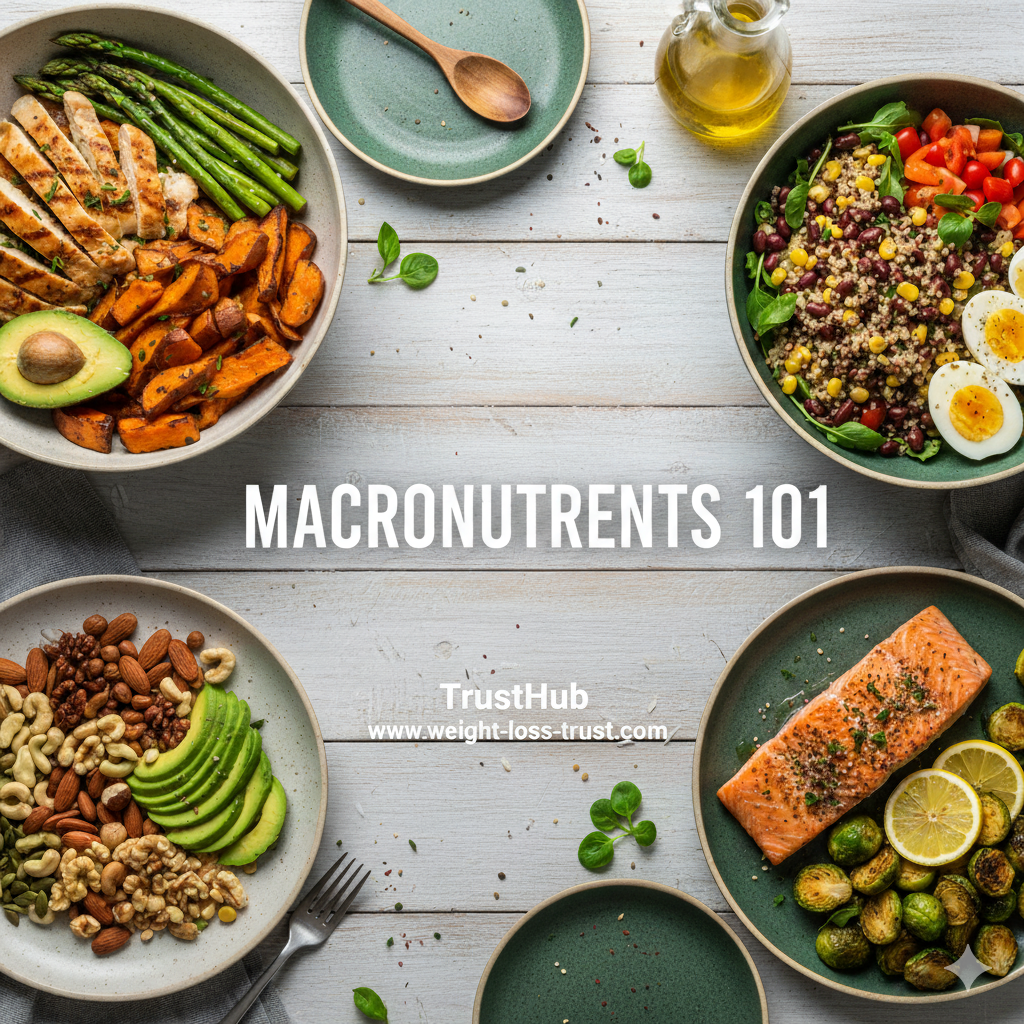
Macronutrients vs. Micronutrients
- Macronutrients are needed in large amounts to provide energy (calories) and support bodily functions.
- Micronutrients are vitamins and minerals needed in much smaller quantities to support growth, brain development, and the immune system. They do not provide calories.
1. Protein: The Non-Negotiable Muscle Builder
Protein is the most crucial macronutrient for anyone focused on body composition and weight loss.
The Role of Protein in Weight Loss (LSI: Satiety, Thermic Effect, Muscle Synthesis)
- Increased Satiety: Protein is the most satiating macro. It keeps you feeling full for longer, making it easier to stick to your calorie goals and manage appetite.
- Extensive research published by the National Institutes of Health (NIH) confirms that increasing daily protein intake is a highly effective strategy for boosting satiety and helping to control appetite and body weight.
- The Thermic Effect of Food (TEF): Protein requires more energy to digest than fats or carbohydrates. Approximately 20–30% of the calories you consume from protein are burned during digestion, providing a small but reliable metabolic boost.
- Muscle Preservation: When in a calorie deficit, the body risks breaking down muscle for energy. Adequate protein intake is vital for muscle protein synthesis, ensuring that the weight you lose comes primarily from fat, not lean tissue.
Recommended Intake and Sources
Most research suggests that for optimal weight loss and muscle preservation, aiming for 1.6 to 2.2 grams of protein per kilogram of body weight is beneficial. For quick reference, this range translates to approximately 0.7 to 1.0 grams of protein per pound of goal body weight.
- Best Sources of protein: Lean meats (chicken, turkey), fish (salmon, tuna), eggs, dairy (Greek yogurt, cottage cheese), and plant-based options (lentils, beans, tofu).
- Balancing your macros
- Recommended Ratios: A common guideline is to aim for a balance of 40% carbohydrates, 30% protein, and 30% fat, though this can be adjusted based on your personal goals.
Macronutrient ratios
The ideal ratio of macros depends on individual factors like age, activity level, and health goals.
- General guidelines from the USDA recommend a daily intake of:
- Carbohydrates: 45–65% of total calories
- Protein: 10–35% of total calories
- Fats: 20–35% of total calories
- A balanced diet emphasizes consuming a variety of whole foods to naturally obtain the right balance of all three macronutrients.
2. Carbohydrates: Macronutrients Primary Energy Source
Carbohydrates are often the most misunderstood and unfairly targeted macronutrient. They are not the enemy; they are your body’s preferred and most efficient source of energy.
The Critical Difference: Complex vs. Simple (LSI: Fiber, Blood Sugar, Whole Grains)
The secret to integrating carbs into a weight loss plan is distinguishing between high-quality and low-quality sources:
- Complex Carbohydrates (The Good): Found in whole grains, vegetables, and legumes. They are rich in fiber, which slows digestion, leads to gradual energy release, and stabilizes blood sugar levels. Fiber also supports a healthy gut microbiome—a key factor in appetite regulation.
- Simple Carbohydrates (The Limit): Found in refined sugars, white bread, and sugary drinks. They cause rapid blood sugar spikes and crashes, leading to quick hunger and energy slumps.
How to Strategically Use Carbs
Focus on consuming carbohydrates around your exercise window, and always pair them with protein and healthy fats to slow absorption and maximize satiety.
- Best Sources: Oats, quinoa, brown rice, sweet potatoes, and all non-starchy vegetables.
3. Fats: Essential Macronutrients for Health, Calorie-Dense for Caution
Fats are crucial for numerous body functions, including hormone production, vitamin absorption (A, D, E, K), and brain health. However, because they contain nine calories per gram (compared to four for protein and carbs), they must be managed carefully in a calorie deficit.
The Three Types of Fat (LSI: Omega-3, Saturated, Monounsaturated)
- Monounsaturated and Polyunsaturated Fats: The healthiest types, including Omega-3s. These are essential for cardiovascular and brain health and should be prioritized.
- Saturated Fats: Found mainly in animal products. Should be consumed in moderation.
- Trans Fats: Artificially processed fats. Should be avoided entirely due to documented health risks.
Tips for Managing Fat Intake
Since fat is calorie-dense, portion control is vital. A small serving of olive oil (a tablespoon) can be over 120 calories.
- Prioritize Quality: Use healthy fats (like those containing Omega-3s) to replace less healthy ones, rather than simply adding them to your diet.
- Best Sources: Avocados, nuts and seeds, olive oil, and fatty fish (like salmon).
5. Frequently Asked Questions (FAQ)
Q1: What is the primary role of each macronutrient in the body?
A: The three macronutrients have distinct roles:
- Protein is essential for tissue repair, immune function, and maintaining muscle mass.
- Carbohydrates are the body’s primary and preferred source of energy (fuel for the brain and muscles).
- Fats are critical for hormone production, cushioning organs, and absorbing fat-soluble vitamins (A, D, E, K).
Q2: What is the Thermic Effect of Food (TEF)?
A: The Thermic Effect of Food (TEF) is the energy (calories) your body burns simply to digest, absorb, and process the nutrients you’ve just consumed. Protein has the highest TEF (20-30% of its calories are burned during digestion), which is one reason it’s crucial for weight loss.
Q3: Are carbohydrates bad for weight loss?
A: No, carbohydrates are not inherently bad. The issue lies in the type of carbohydrate. Complex carbohydrates (whole grains, vegetables) are rich in fiber, which supports satiety and stabilizes blood sugar. Simple carbohydrates (refined sugars) should be limited because they cause energy crashes and rapid hunger.
Q4: How much fat do I need to be healthy?
A: While fat is calorie-dense, you must consume enough to support vital functions. Generally, health organizations recommend that fats make up 20-35% of your total daily calorie intake. Prioritize monounsaturated and polyunsaturated fats (Omega-3s) to support cardiovascular and brain health.
Q5: Should I track net carbs or total carbs?
A: For most people following a balanced diet, tracking total carbohydrates is sufficient. However, if you are focusing heavily on fiber intake or following a very low-carb diet, tracking net carbs (Total Carbs minus Fiber and Sugar Alcohols) can be more relevant, as fiber does not impact blood sugar the same way.
Macronutrients Summary and Next Steps
| Macronutrient | Primary Role | Calories per Gram | Weight Loss Strategy |
|---|---|---|---|
| Protein | Tissue repair, Satiety | 4 | Maximize intake to protect muscle and curb hunger. |
| Carbohydrates | Energy | 4 | Prioritize complex, high-fiber sources. |
| Fats | Hormone production, Vitamin absorption | 9 | Control portions and prioritize healthy sources. |
Understanding your macros allows you to move beyond restrictive diets toward an intelligent, flexible approach to eating. This is the foundation of sustainable weight management.
4. Calculating Your Personalized Macro Split
Understanding the roles of macronutrients is only the first step; the key to success lies in personalized application. Your ideal macro split is based on your nique goals, activity level, and body composition.
- Determine Calorie Needs: Start by accurately determining your Total Daily Energy Expenditure (TDEE). This is the number of calories you burn each day. For weight loss, you will subtract a moderate amount (typically 300–500 calories) to create a calorie deficit.
- Establish Protein Goal: As the most critical macro for weight loss and muscle preservation, aim for your protein target first (1.6 to 2.2 grams per kilogram of body weight).
- Allocate Fats: Set your healthy fat intake next. This is typically maintained at 20–30% of your total daily calories to support hormone health and vitamin absorption.
- Fill Remaining Calories with Carbs: The remaining calories in your budget are then filled with carbohydrates, prioritizing complex, high-fiber sources.
👉 Next Step: Use our internal TDEE & BMR Calculator to establish your personalized calorie goal and ideal macro split percentages.
5. Macronutrients Practical Tracking
Counting macros requires consistency, but it does not need to be complicated. Use a dedicated tracking app and follow these tips:
- Weigh Your Food: Especially for calorie-dense items like fats and protein sources, use a food scale for the first few weeks to ensure accuracy.
- Use Raw/Uncooked Weights: Always log foods using their raw weight before cooking, as the cooking process can change weight due to moisture loss or absorption.
- Focus on Consistency, Not Perfection: The goal is long-term sustainability. If you are off by a few grams one day, simply adjust the next—the consistency of the process is what delivers results.
For a complete overview of our nutrition philosophy and how this article fits into your full journey, consult The Ultimate Guide to Safe & Credible Weight Loss.